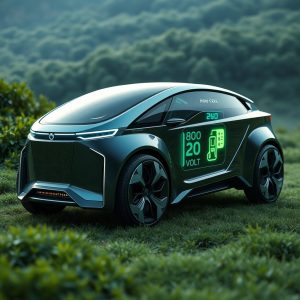
The Invisible Fusion: How 800 Volt Architecture and Autonomous Driving Are Crafting the Self-Driving Ecosystem of Tomorrow
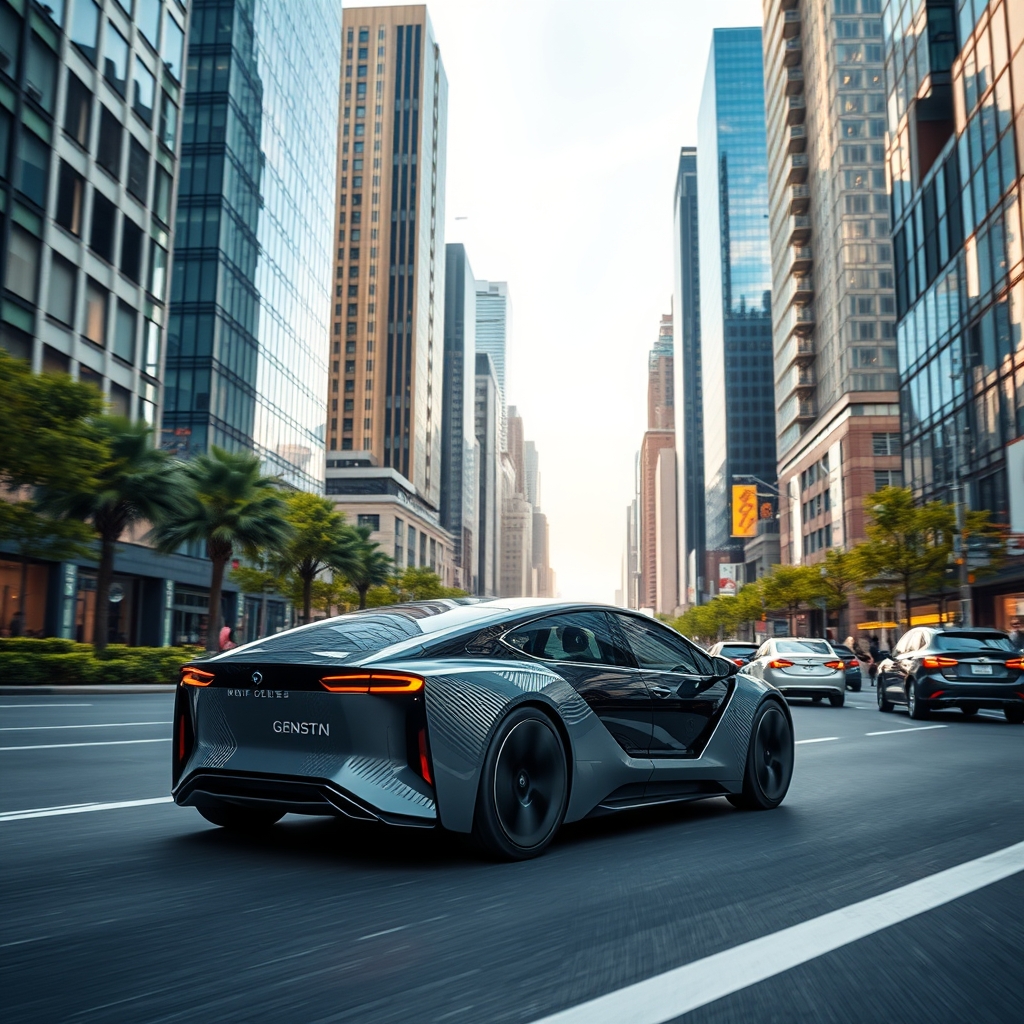
In the quiet hum of progress, a new revolution is unfolding in the automotive industry. It’s not the roar of engines or the screech of tires, but the silent, invisible fusion of cutting-edge technologies that are redefining the future of mobility. At the heart of this revolution lies the 800 Volt Architecture, a game-changer in the world of electric vehicles (EVs).
The 800 Volt Architecture: A Leap Forward in EV Technology
Traditional EVs use a 400 Volt architecture, which limits their power output and range. The 800 Volt Architecture, on the other hand, offers a significant leap forward. It allows for higher power outputs, enabling faster acceleration and improved performance. Moreover, it enhances energy efficiency, as the higher voltage reduces energy loss during transmission. This means that EVs equipped with 800 Volt Architecture can travel longer distances on a single charge, making them more practical for everyday use.
Autonomous Driving: The Future of Mobility
Autonomous driving is another key player in the mobility revolution. It promises to transform the way we travel, making our roads safer, more efficient, and more accessible. Autonomous vehicles (AVs) can operate without human intervention, reducing the risk of human error and improving traffic flow. They can also provide on-demand mobility, making it easier for people to get around, especially in urban areas.
The Invisible Fusion: 800 Volt Architecture and Autonomous Driving
The fusion of 800 Volt Architecture and Autonomous Driving is set to revolutionize the automotive industry. The high power output and energy efficiency of 800 Volt Architecture will enable AVs to perform complex maneuvers with ease, making them safer and more efficient. Moreover, the ability to travel longer distances on a single charge will make AVs more practical and cost-effective.
Improved Performance and Safety
AVs equipped with 800 Volt Architecture will be able to accelerate and brake more quickly and smoothly. This will not only improve the driving experience but also enhance safety. The high power output will allow AVs to perform complex maneuvers, such as sudden stops and sharp turns, with ease. This will make them less likely to be involved in accidents.
Enhanced Energy Efficiency
The 800 Volt Architecture is also more energy-efficient than traditional architectures. This means that AVs will be able to travel longer distances on a single charge. This is particularly beneficial for autonomous fleets, which need to operate for long periods without recharging. The enhanced energy efficiency will also make AVs more environmentally friendly, as they will produce fewer emissions.
Cost-Effective and Practical
The combination of 800 Volt Architecture and Autonomous Driving will also make EVs more cost-effective and practical. The high power output and energy efficiency will enable AVs to travel longer distances on a single charge, reducing the need for frequent recharging. This will make AVs more affordable to operate and maintain. Moreover, the ability to perform complex maneuvers will make AVs more versatile, opening up new possibilities for their use.
The Future of Mobility
The fusion of 800 Volt Architecture and Autonomous Driving is just the beginning. As these technologies continue to evolve, we can expect to see even more innovations in the automotive industry. The future of mobility is not just about getting from point A to point B, but about creating a seamless, efficient, and enjoyable travel experience. It’s about making our roads safer, our cities smarter, and our lives more connected. The invisible fusion of 800 Volt Architecture and Autonomous Driving is a significant step towards this future. It’s a future where technology and innovation go hand in hand, and where the possibilities are as vast as the horizon.