The Invisible Symphony: How Liquid Hydrogen Storage and In-Cabin Intelligence Are Orchestrating the Future of Mobility
The automotive industry is undergoing a transformation so profound that it feels less like evolution and more like a revolution. At the heart of this shift lies a dual promise: sustainability and intelligence. Two technologies, in particular, are emerging as the unsung heroes of this new era—liquid hydrogen storage and in-cabin intelligence. Together, they are not just redefining what vehicles can do but also how they interact with the world and the people inside them.
The Quiet Revolution of Liquid Hydrogen Storage
Hydrogen fuel cells have long been touted as a game-changer for zero-emission mobility, but their potential has often been limited by storage challenges. Traditional compressed hydrogen gas requires high-pressure tanks, which are bulky, heavy, and pose safety concerns. Enter liquid hydrogen storage—a breakthrough that is unlocking new possibilities for hydrogen-powered vehicles.
By cooling hydrogen to -253°C, it becomes a dense liquid that can be stored in lightweight, insulated tanks. This not only increases the energy density but also allows for longer driving ranges and faster refueling times. For commercial vehicles, heavy-duty trucks, and even aviation, liquid hydrogen storage is a game-changer. It eliminates the range anxiety that has plagued electric vehicles while offering a truly zero-emission alternative to fossil fuels.
But the implications go beyond just range. Liquid hydrogen storage enables a more flexible and scalable energy ecosystem. Hydrogen can be produced from renewable sources, stored for long periods, and transported efficiently. This makes it a critical component in the transition to a sustainable energy future, where vehicles are not just consumers of energy but potential contributors to a smarter grid.
The Rise of In-Cabin Intelligence: More Than Just a Ride
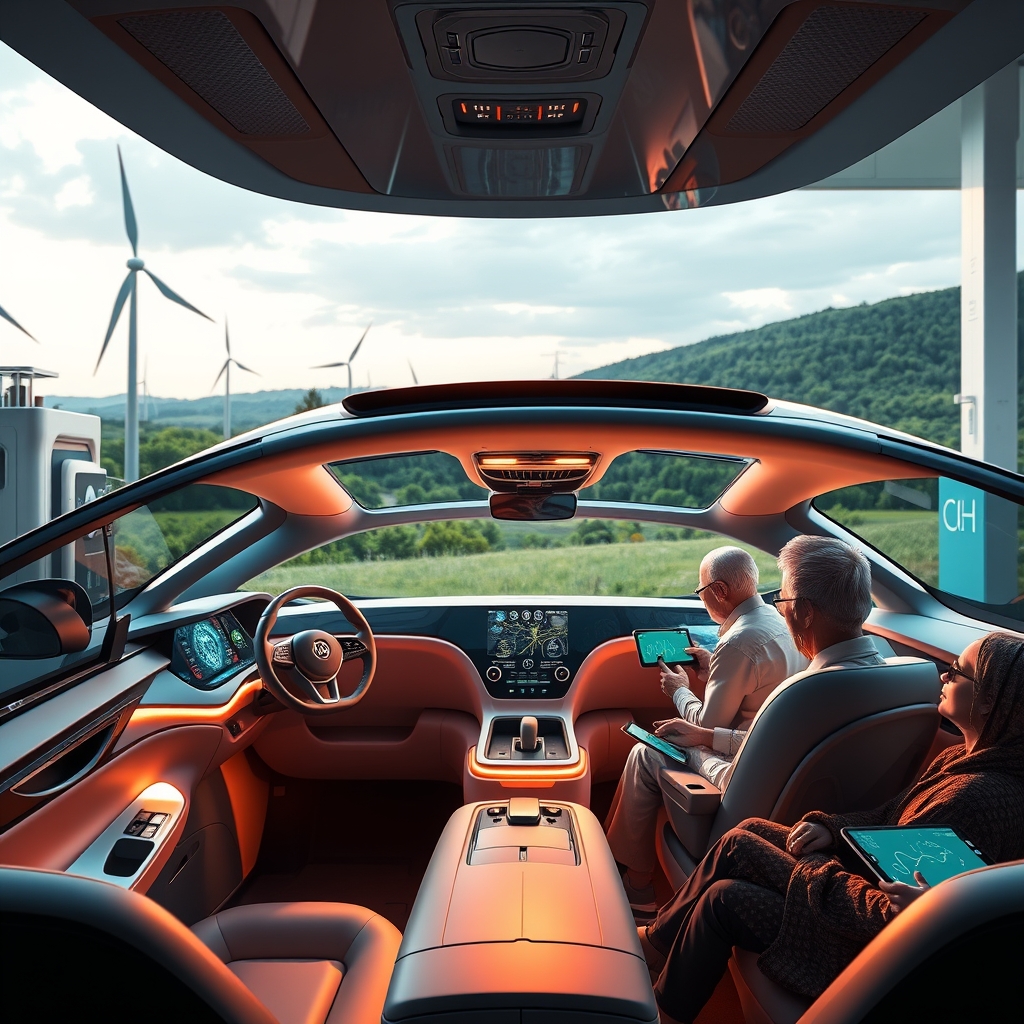
While liquid hydrogen storage is redefining the energy that powers vehicles, in-cabin intelligence is transforming the experience inside them. Gone are the days when a car was merely a means of transportation. Today’s vehicles are becoming intelligent spaces that adapt to the needs of their occupants, offering comfort, entertainment, and even productivity on the go.
In-cabin intelligence leverages AI, machine learning, and advanced sensors to create a personalized and intuitive environment. Voice assistants can adjust climate settings, play music, or even suggest routes based on real-time traffic data. Biometric sensors monitor driver alertness, adjusting lighting or seat positions to reduce fatigue. Augmented reality (AR) dashboards provide real-time navigation overlays, making driving safer and more intuitive.
But the true potential of in-cabin intelligence lies in its ability to learn and adapt. Over time, the vehicle becomes attuned to the preferences and habits of its occupants, anticipating needs before they are even expressed. For example, if a driver typically stops for coffee on their morning commute, the vehicle might suggest a nearby café and even pre-order their usual drink. This level of personalization blurs the line between vehicle and companion, creating a seamless and immersive experience.
The Synergy of Sustainability and Intelligence
What makes the convergence of liquid hydrogen storage and in-cabin intelligence so powerful is their complementary nature. One addresses the external challenges of sustainability and energy efficiency, while the other enhances the internal experience of mobility. Together, they represent a holistic approach to the future of transportation—one that is not only cleaner but also smarter and more human-centric.
Consider a long-haul truck driver relying on liquid hydrogen for extended range, while in-cabin intelligence monitors their fatigue levels and suggests rest stops. Or an urban commuter using a hydrogen-powered vehicle that integrates with their smart home, adjusting the thermostat and lighting as they approach. These scenarios are not just futuristic fantasies; they are becoming tangible realities as automakers and tech companies collaborate to push the boundaries of innovation.
Challenges and the Road Ahead
Despite the promise, challenges remain. Liquid hydrogen storage requires significant infrastructure investment, including production, transportation, and refueling stations. Safety concerns, such as the risk of leaks or boil-off, must also be addressed through advanced materials and engineering solutions. Meanwhile, in-cabin intelligence raises questions about data privacy and security, as vehicles collect and process vast amounts of personal information.
Yet, these challenges are not insurmountable. Governments, industries, and researchers are already collaborating to overcome these hurdles. Pilot projects for liquid hydrogen refueling stations are underway, while advancements in AI and cybersecurity are making in-cabin intelligence safer and more reliable. The road ahead is paved with opportunities, and the pace of innovation shows no signs of slowing down.
The Human Element: Why It Matters
At its core, the future of mobility is not just about technology—it’s about people. Liquid hydrogen storage and in-cabin intelligence are not just innovations; they are enablers of a better quality of life. They promise cleaner air, safer roads, and more enjoyable journeys. They represent a shift from viewing vehicles as mere machines to seeing them as partners in our daily lives.
Imagine a world where your vehicle not only takes you where you need to go but also understands your needs, anticipates your desires, and contributes to a healthier planet. This is the vision that liquid hydrogen storage and in-cabin intelligence are bringing to life. It’s a future where mobility is not just efficient but also empathetic, where technology serves humanity in ways we are only beginning to imagine. The invisible symphony of innovation is playing, and its melody is one of progress, sustainability, and intelligence—a harmony that promises to redefine our relationship with the road and the world around us.