The Invisible Synapse: How Predictive Maintenance AI and Solid State Batteries Are Crafting the Self-Optimizing Electric Vehicle
The automotive industry is undergoing a seismic shift, one where the boundaries between hardware and software blur into a seamless, intelligent ecosystem. At the heart of this transformation lies the convergence of two groundbreaking technologies: predictive maintenance AI and solid-state batteries. Together, they are not just redefining the electric vehicle (EV) but crafting a new paradigm of self-optimizing mobility, where efficiency, reliability, and sustainability intertwine in ways previously unimaginable.
The Brain Behind the Brawn: Predictive Maintenance AI
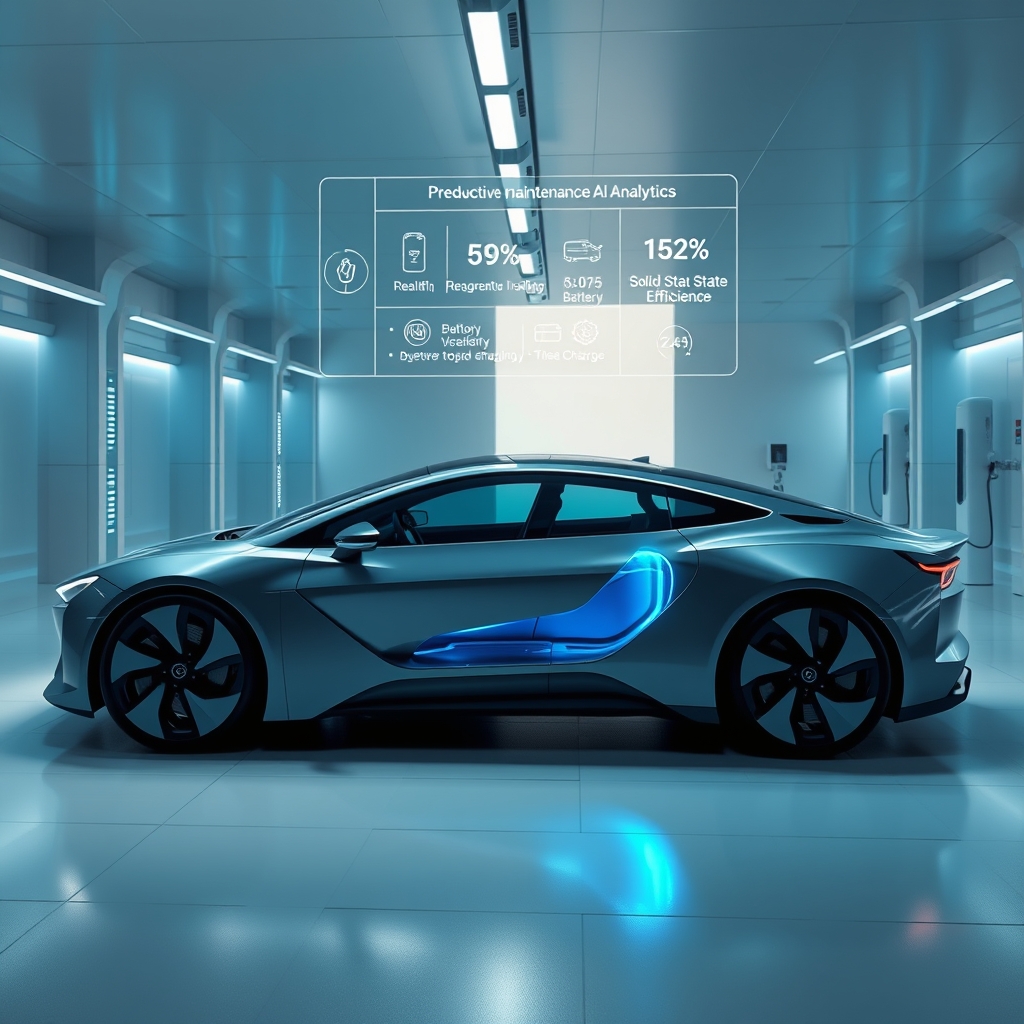
Predictive maintenance AI is the silent sentinel of the modern EV, a digital guardian that anticipates issues before they arise. Unlike traditional maintenance, which relies on fixed schedules or reactive repairs, predictive AI leverages machine learning and real-time data to monitor the health of every component in a vehicle. From the battery pack to the regenerative braking system, sensors feed a continuous stream of information into algorithms that detect anomalies, predict failures, and even recommend preemptive actions.
This technology is not merely about preventing breakdowns; it’s about optimizing performance. For instance, AI can analyze driving patterns to adjust battery usage, ensuring longevity while maximizing range. It can detect subtle changes in the regenerative braking system’s efficiency, recalibrating it to recover more energy without compromising safety. In essence, predictive maintenance AI transforms the EV from a static machine into a dynamic, learning entity that evolves with its driver.
The Data-Driven Lifeline
The backbone of predictive maintenance is data—vast amounts of it. Modern EVs are equipped with hundreds of sensors that track everything from temperature fluctuations in the battery to the wear and tear on the carbon fiber chassis. This data is processed in the cloud, where AI models identify patterns that human engineers might overlook. For example, a slight increase in resistance in a specific battery cell could signal the onset of degradation, allowing the system to adjust charging cycles or even alert the driver to seek service before a failure occurs.
Moreover, predictive AI extends beyond the vehicle itself. It integrates with broader ecosystems, such as smart grids and vehicle-to-everything (V2X) networks, to create a holistic view of mobility. Imagine an EV that not only predicts its own maintenance needs but also communicates with charging stations to schedule optimal times for ultra-fast charging, reducing strain on the grid and lowering costs for the driver. This level of intelligence is not a distant dream but a rapidly approaching reality.
The Power Within: Solid State Batteries
While predictive AI acts as the brain of the self-optimizing EV, solid-state batteries represent its beating heart. These next-generation power sources are poised to revolutionize electric mobility by addressing the two most significant limitations of current lithium-ion batteries: energy density and safety.
Solid-state batteries replace the liquid or gel electrolyte found in conventional batteries with a solid material, such as ceramic or polymer. This seemingly simple change unlocks a host of benefits. First, it dramatically increases energy density, allowing EVs to travel farther on a single charge. Second, it eliminates the risk of thermal runaway—a leading cause of battery fires—making EVs safer. Third, solid-state batteries can be charged faster and last longer, reducing the total cost of ownership for drivers.
A Leap Toward Sustainability
The advantages of solid-state batteries extend beyond performance. Their design aligns perfectly with the principles of the circular material economy. Unlike lithium-ion batteries, which rely on scarce and environmentally taxing materials like cobalt, solid-state batteries can be engineered using more abundant and sustainable resources. Additionally, their longer lifespan reduces the need for frequent replacements, minimizing waste and lowering the carbon footprint of EV production.
Furthermore, solid-state batteries are inherently more compatible with advanced charging infrastructures, such as 800-volt architectures and ultra-fast charging networks. This synergy accelerates the transition to a fully electrified transportation system, where range anxiety and charging times become relics of the past. When paired with bidirectional charging, solid-state batteries can even serve as mobile energy storage units, feeding power back into the grid during peak demand or emergencies.
The Symbiosis of Intelligence and Power
The true magic of the self-optimizing EV lies in the interplay between predictive maintenance AI and solid-state batteries. This symbiosis creates a feedback loop where data informs power, and power enhances data. For example, AI can monitor the health of a solid-state battery in real time, adjusting charging and discharging cycles to extend its lifespan. Conversely, the superior performance of solid-state batteries provides a stable and reliable power source for AI systems, ensuring they operate at peak efficiency.
Redefining the Driving Experience
This convergence is not just about technical specifications; it’s about redefining the driving experience. Imagine an EV that learns your habits, anticipates your needs, and adapts to your lifestyle. It could suggest the most efficient route based on traffic and battery levels, pre-condition the cabin to your preferred temperature before you enter, or even negotiate with smart grids to secure the best charging rates. The vehicle becomes more than a mode of transport—it becomes a trusted companion, a co-pilot that evolves with you.
The Road Ahead
The integration of predictive maintenance AI and solid-state batteries is a testament to the rapid pace of innovation in the automotive industry. However, this is just the beginning. As these technologies mature, they will pave the way for even more advanced systems, such as fully autonomous driving, urban air mobility, and seamless integration with smart cities. The self-optimizing EV is not merely a product of the future; it is a catalyst for a broader transformation in how we live, work, and move.
As we stand on the precipice of this new era, one thing is clear: the vehicles of tomorrow will not just be smarter and more powerful—they will be alive in ways we are only beginning to understand. The invisible synapse between AI and solid-state batteries is the spark that will ignite this revolution, crafting a future where mobility is not just sustainable and efficient but also deeply intelligent and inherently human.