The Invisible Spark: How Aerodynamic Efficiency and Predictive Maintenance AI Are Igniting the Next Era of Electric Mobility

The road ahead is no longer just a path—it’s a dynamic, intelligent ecosystem where every curve, every breeze, and every byte of data converges to redefine how we move. At the heart of this transformation lies a quiet revolution, one that blends the precision of aerodynamics with the foresight of artificial intelligence. Together, they are not just shaping the future of electric vehicles (EVs) but reimagining the very essence of mobility itself.
The Art of Slicing Through Air
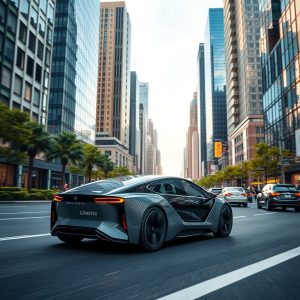
Aerodynamic efficiency is the unsung hero of electric mobility, a silent force that dictates everything from range to performance. In an era where every watt of energy counts, the ability to minimize drag is no longer a luxury—it’s a necessity. Modern EVs are shedding their boxy, resistance-heavy designs in favor of sleek, fluid forms that cut through the air like a blade. Active grille shutters, underbody panels, and even adaptive spoilers are no longer just aesthetic flourishes; they are engineered solutions to a fundamental challenge: how to make every electron count.
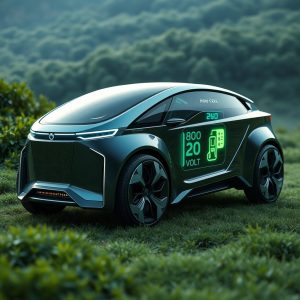
But the pursuit of aerodynamic perfection goes beyond mere shape. It’s about rethinking the entire vehicle architecture. The shift toward 800-volt architectures and modular EV platforms has enabled designers to lower ride heights, optimize wheel placement, and even integrate cooling systems that reduce turbulence. The result? Vehicles that don’t just look futuristic but behave like them—gliding effortlessly at highway speeds while sipping energy rather than guzzling it.
The Science Behind the Silence
The physics of aerodynamics is deceptively simple: reduce drag, and you extend range. Yet, achieving this in practice is anything but. Computational fluid dynamics (CFD) simulations now allow engineers to test thousands of design iterations before a single prototype is built. These digital wind tunnels reveal how air flows over, under, and around a vehicle, identifying pressure points and turbulence zones that would otherwise go unnoticed. The insights gleaned from these simulations are then translated into real-world adjustments—micro-adjustments that can yield macro gains.
Take, for example, the integration of smart glass roofs that not only enhance cabin ambiance but also contribute to aerodynamic efficiency. By reducing the need for bulky sunroof mechanisms, these glass panels maintain a smooth, uninterrupted surface that minimizes drag. Similarly, the use of carbon fiber chassis allows for thinner, more streamlined body panels without sacrificing structural integrity. Every gram saved, every millimeter of drag reduced, adds up to a vehicle that is not just efficient but exhilarating to drive.
The AI Guardian: Predictive Maintenance in the Age of Electric Mobility
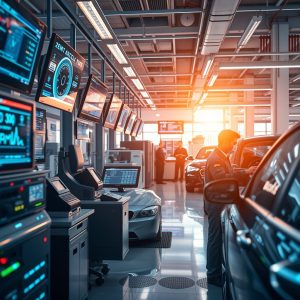
If aerodynamics is the body of the EV revolution, then predictive maintenance powered by AI is its nervous system—a network of sensors, algorithms, and machine learning models that anticipate problems before they arise. Gone are the days of reactive repairs and unexpected breakdowns. In their place stands a proactive approach to vehicle health, one that leverages real-time data to keep EVs running at peak performance.
The foundation of this system lies in the Vehicle-to-Everything (V2X) ecosystem, where cars communicate not just with each other but with infrastructure, traffic systems, and even the grid. Embedded sensors monitor everything from battery health to tire pressure, while AI algorithms analyze this data to detect patterns and anomalies. A slight deviation in motor temperature, an unusual vibration in the suspension, or a gradual decline in regenerative braking efficiency—these are no longer red flags but early warnings, addressed long before they escalate into costly repairs.
The Human Touch in a Digital World
What makes predictive maintenance truly revolutionary is its ability to blend machine precision with human intuition. AI doesn’t just flag potential issues; it contextualizes them. For instance, if an EV’s battery degradation accelerates unexpectedly, the system doesn’t just alert the driver—it cross-references the data with charging habits, environmental conditions, and even the vehicle’s usage patterns to provide tailored recommendations. Maybe it’s time to adjust charging cycles, or perhaps a software update is needed to optimize battery management. The goal is not just to fix problems but to prevent them, ensuring that every journey is as seamless as the first.
This level of intelligence extends beyond the vehicle itself. Fleet operators, for example, can use predictive maintenance to optimize routes, reduce downtime, and extend the lifespan of their EVs. In a world where sustainable supply chains and circular material economies are becoming the norm, the ability to maximize the utility of every component is not just a competitive advantage—it’s a responsibility.
The Synergy of Form and Function
The marriage of aerodynamic efficiency and predictive maintenance AI is more than the sum of its parts. It represents a fundamental shift in how we perceive mobility—not as a series of isolated systems but as a cohesive, intelligent whole. When a vehicle is designed to slip through the air with minimal resistance, it doesn’t just save energy; it reduces wear and tear on components, extending their lifespan and reducing the need for replacements. Similarly, when AI predicts and prevents mechanical issues, it ensures that the vehicle’s aerodynamic efficiency is never compromised by suboptimal performance.
This synergy is particularly evident in the realm of urban air mobility, where the principles of aerodynamic efficiency are being applied to eVTOLs (electric vertical takeoff and landing aircraft). These flying machines must balance lift, drag, and energy consumption in ways that ground vehicles never have to. Predictive maintenance, meanwhile, ensures that every flight is as safe as it is efficient, with AI monitoring everything from rotor health to battery performance in real time. The result is a future where mobility is not just electric but effortless, whether on the ground or in the sky.
The Road Ahead: A Seamless, Sustainable Future
The journey toward this future is already underway, but its success hinges on more than just technological innovation. It requires a cultural shift—a recognition that mobility is not just about getting from point A to point B but about doing so in a way that is efficient, intelligent, and sustainable. Aerodynamic efficiency and predictive maintenance AI are not just tools; they are enablers of a new era, one where vehicles are not just machines but partners in a larger ecosystem of movement.
As these technologies continue to evolve, they will unlock new possibilities—vehicles that adapt their aerodynamics in real time to changing conditions, AI that not only predicts but prescribes solutions, and a mobility landscape that is as dynamic as it is dependable. The road ahead is not just smarter; it’s smoother, quieter, and more exhilarating than ever before. And in this invisible spark of innovation, we find the promise of a future where mobility is not just a means to an end but an experience in itself.