
The Invisible Fusion: How Modular EV Platforms and Hydrogen Fuel Cells Are Crafting the Next Era of Scalable, Zero-Emission Mobility
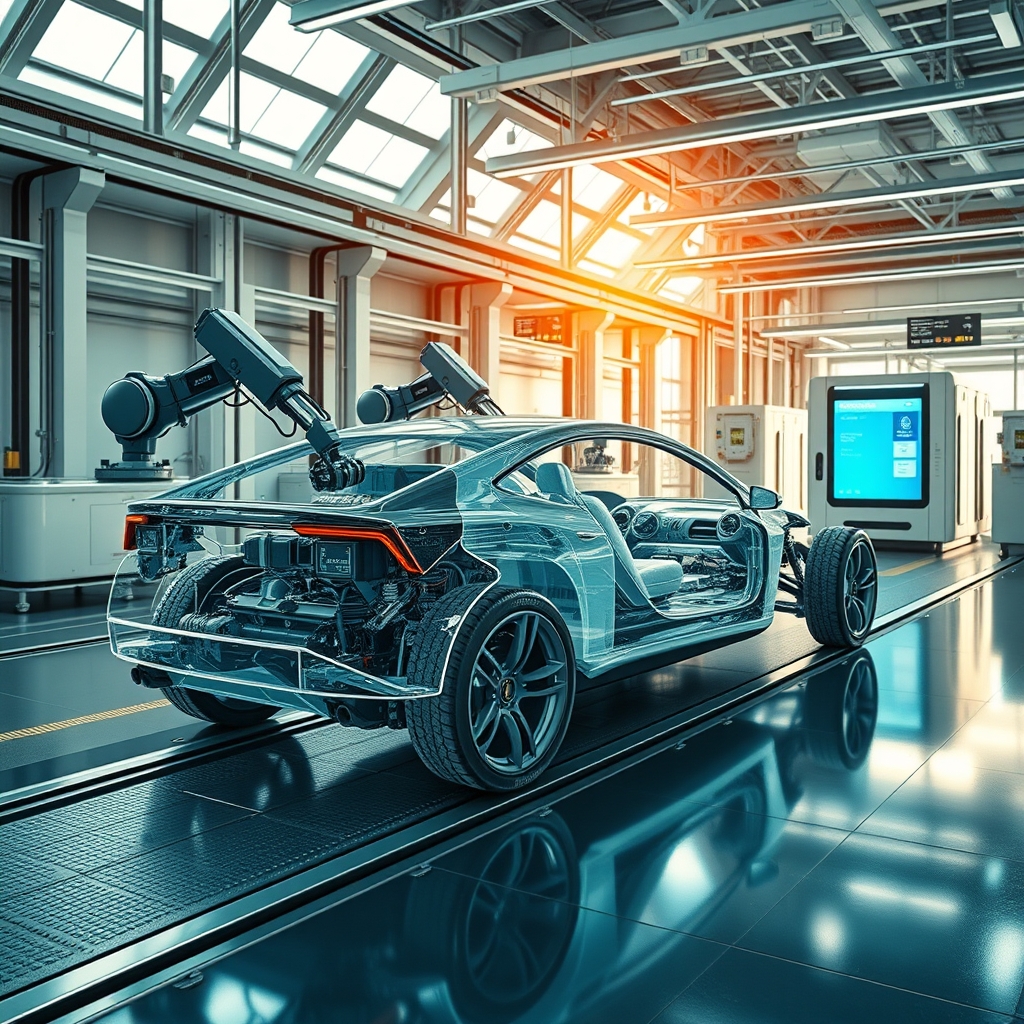
The automotive industry is undergoing a seismic shift, one that transcends the mere replacement of internal combustion engines with electric motors. At the heart of this transformation lies a dual revolution: the rise of modular electric vehicle (EV) platforms and the resurgence of hydrogen fuel cell technology. Together, these innovations are not just redefining how vehicles are built and powered—they are laying the foundation for a scalable, zero-emission future that could reshape entire industries.
The Modular Revolution: Building Flexibility into Mobility
Modular EV platforms represent a paradigm shift in automotive manufacturing. Unlike traditional vehicle architectures, which are rigid and model-specific, modular platforms are designed as flexible frameworks that can underpin a wide range of vehicles—from compact city cars to sprawling SUVs and even commercial fleets. This adaptability is achieved through a combination of standardized battery packs, scalable chassis designs, and interchangeable components that can be mixed and matched to suit different performance, range, and form factor requirements.
Companies like Volkswagen with its MEB platform, Hyundai’s E-GMP, and Tesla’s unibody approach are leading the charge, demonstrating how modularity can slash development costs, accelerate time-to-market, and enable rapid iteration. For automakers, this means the ability to respond swiftly to shifting consumer demands and regulatory landscapes without reinventing the wheel for each new model. For consumers, it translates to a broader array of choices, from affordable entry-level EVs to high-performance luxury vehicles, all sharing the same underlying DNA.
But the implications of modularity extend far beyond manufacturing efficiency. By decoupling the vehicle’s hardware from its software, modular platforms are paving the way for software-defined vehicles (SDVs), where over-the-air updates and AI-driven features can evolve long after the car leaves the factory. This shift is not just about keeping vehicles up to date—it’s about creating a living, breathing ecosystem where mobility is continuously optimized for safety, efficiency, and user experience.
Hydrogen’s Second Act: The Fuel Cell Renaissance
While battery-electric vehicles (BEVs) have dominated the conversation around zero-emission mobility, hydrogen fuel cells are emerging as a compelling alternative, particularly for applications where weight, range, and refueling time are critical. Unlike BEVs, which rely on large, heavy battery packs, fuel cell electric vehicles (FCEVs) generate electricity on-demand through a chemical reaction between hydrogen and oxygen, emitting only water vapor in the process. This makes them ideal for heavy-duty transport, long-haul trucking, and even aviation, where battery weight and charging infrastructure present significant challenges.
The recent surge in hydrogen investment—from governments, energy companies, and automakers alike—signals a growing recognition of its potential. The European Union’s hydrogen strategy, the U.S. Department of Energy’s Hydrogen Shot initiative, and Japan’s ambitious plans to become a hydrogen society are just a few examples of how the world is betting big on this versatile energy carrier. Meanwhile, companies like Toyota, Hyundai, and Nikola are doubling down on FCEVs, with models like the Toyota Mirai and Hyundai NEXO already on the road, and hydrogen-powered trucks poised to revolutionize freight transport.
Yet, hydrogen’s path to mainstream adoption is not without hurdles. The production of green hydrogen—made using renewable energy—remains expensive, and the infrastructure for storage, transport, and refueling is still in its infancy. Safety concerns, though often overstated, also linger in the public imagination. However, advancements in liquid hydrogen storage, high-pressure tanks, and electrolyzer technology are steadily overcoming these barriers, bringing us closer to a future where hydrogen is as accessible as gasoline or diesel.
The Synergy of Modularity and Hydrogen
The true power of modular EV platforms and hydrogen fuel cells lies in their potential to complement one another. Modularity enables automakers to design vehicles that can seamlessly transition between battery-electric and fuel cell powertrains, depending on the use case. For instance, a modular platform could support a BEV for urban commuting, an FCEV for long-distance travel, or even a hybrid system that combines both technologies for maximum flexibility. This adaptability is particularly valuable in a world where energy landscapes are evolving rapidly, and no single solution is likely to dominate.
Moreover, modular platforms can accelerate the deployment of hydrogen infrastructure by creating economies of scale. As more FCEVs hit the road, demand for hydrogen refueling stations will grow, driving down costs and making the technology more accessible. Conversely, the expansion of hydrogen infrastructure will make FCEVs a more viable option for consumers and fleet operators, creating a virtuous cycle of adoption and innovation.
Beyond the Vehicle: A Holistic Vision for Mobility
The fusion of modular EV platforms and hydrogen fuel cells is not just about building better cars—it’s about reimagining mobility as a holistic, sustainable ecosystem. Modularity enables the integration of advanced features like bidirectional charging, where vehicles can feed energy back into the grid, and vehicle-to-everything (V2X) communication, which allows cars to interact with smart infrastructure and other vehicles. Meanwhile, hydrogen’s versatility extends beyond transportation, with potential applications in energy storage, industrial processes, and even home heating.
This ecosystem approach is already taking shape in projects like the European Clean Hydrogen Alliance, which aims to scale up hydrogen production and deployment across multiple sectors, and in pilot programs like Japan’s hydrogen-powered smart cities. By integrating modular EVs and hydrogen fuel cells into a broader energy and mobility framework, we can create a system that is not only zero-emission but also resilient, adaptable, and capable of meeting the diverse needs of a rapidly changing world.
The road ahead is not without challenges, from the technical hurdles of scaling hydrogen infrastructure to the economic realities of transitioning an entire industry. Yet, the convergence of modular EV platforms and hydrogen fuel cells offers a compelling vision for the future—one where mobility is not just cleaner, but smarter, more flexible, and more inclusive. As these technologies continue to evolve, they will not only redefine the vehicles we drive but also the very fabric of our energy and transportation systems, ushering in an era where zero-emission mobility is not just a possibility, but a reality.