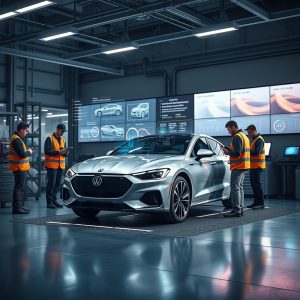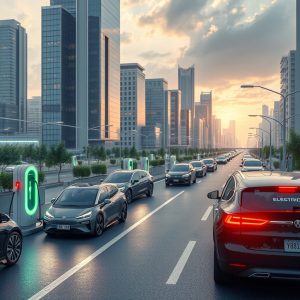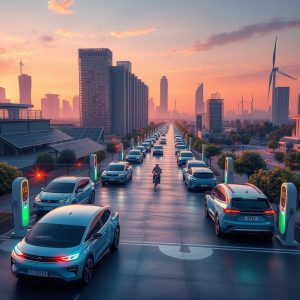
The Invisible Convergence: How Autonomous Driving and Bidirectional Charging Are Crafting the Self-Sustaining EV Ecosystem
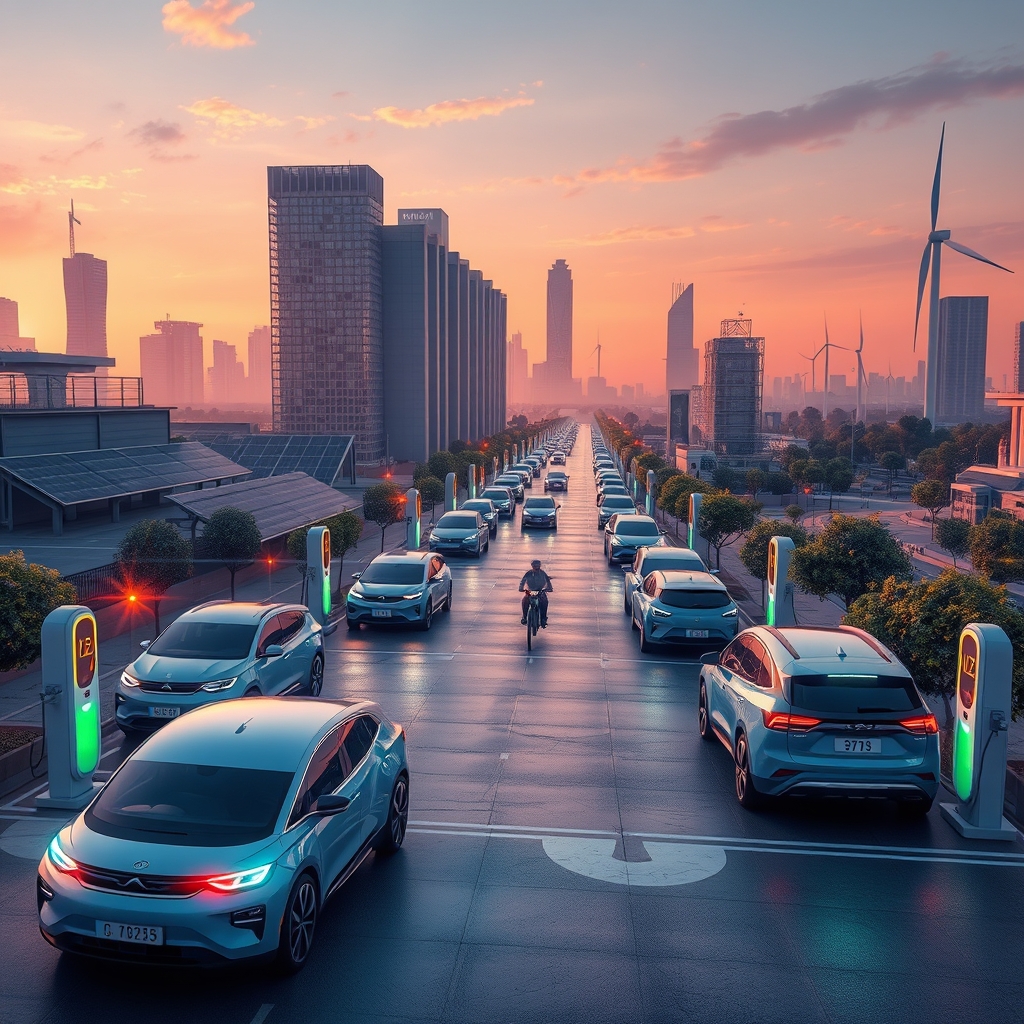
The automotive industry is on the cusp of a revolution, driven by the convergence of autonomous driving and bidirectional charging. These two technologies are not just enhancing the capabilities of electric vehicles (EVs) but are also paving the way for a self-sustaining ecosystem that could redefine our relationship with energy and mobility.
Autonomous Driving: The Backbone of Future Mobility
Autonomous driving is set to transform the way we commute, offering a safer, more efficient, and more convenient mode of transportation. With advancements in AI and machine learning, vehicles are becoming increasingly capable of navigating complex environments without human intervention. This not only reduces the risk of accidents but also optimizes traffic flow, leading to less congestion and lower emissions.
Bidirectional Charging: The Key to Energy Independence
Bidirectional charging, or vehicle-to-grid (V2G) technology, allows EVs to not only draw power from the grid but also feed it back. This two-way flow of energy can stabilize the grid, especially during peak demand periods, and provide a reliable source of backup power during outages. Moreover, it enables EVs to act as mobile energy storage units, further enhancing their utility and value.
The Synergy of Autonomous Driving and Bidirectional Charging
When combined, autonomous driving and bidirectional charging create a powerful synergy. Autonomous vehicles can optimize their routes to ensure they are always within range of charging stations, minimizing downtime and maximizing efficiency. Meanwhile, bidirectional charging can ensure that these vehicles are always topped up, ready to hit the road at a moment’s notice.
Crafting the Self-Sustaining EV Ecosystem
This convergence is crafting a self-sustaining EV ecosystem where vehicles are not just consumers of energy but also producers. They can charge at times of low demand and feed power back to the grid during peak periods, helping to balance supply and demand. This not only makes the grid more resilient but also reduces the overall cost of energy.
In this ecosystem, EVs are not just a means of transportation but also a crucial component of the energy infrastructure. They can help integrate renewable energy sources like solar and wind, which are intermittent by nature, by storing excess energy and releasing it when needed. This makes the entire system more sustainable and less reliant on fossil fuels.
As we look to the future, the convergence of autonomous driving and bidirectional charging promises a world where mobility and energy are seamlessly integrated. This is not just a technological advancement; it’s a paradigm shift that could redefine our cities, our energy systems, and our way of life. The self-sustaining EV ecosystem is not a distant dream but a tangible reality that is already taking shape. It’s a future where our vehicles are not just tools for transportation but also partners in creating a more sustainable and efficient world.