Smart Cities and EVs: How Vehicle-to-Everything (V2X) Technology Works
As urban landscapes evolve into smart cities, the integration of electric vehicles (EVs) and advanced communication technologies is reshaping how we think about energy, transportation, and infrastructure. At the heart of this transformation lies Vehicle-to-Everything (V2X) technology, a groundbreaking innovation that enables EVs to communicate with the world around them. From powering homes during outages to stabilizing the electrical grid, V2X is not just a futuristic concept—it’s already making waves in cities worldwide. But how does it work, and why is it a game-changer for smart cities?
The Building Blocks of V2X Technology
V2X is an umbrella term for a suite of technologies that allow electric vehicles to interact with various elements of their environment. These interactions are categorized into three primary types: Vehicle-to-Grid (V2G), Vehicle-to-Home (V2H), and Vehicle-to-Infrastructure (V2I). Each of these plays a unique role in enhancing energy efficiency, reducing costs, and improving the resilience of urban systems.
Vehicle-to-Grid (V2G): Powering the Future
V2G technology enables bidirectional energy flow between EVs and the electrical grid. Instead of merely drawing power to charge, EVs equipped with V2G can feed excess energy back into the grid when demand is high. This capability turns EVs into mobile energy storage units, helping to balance supply and demand, reduce peak load pressures, and even generate revenue for vehicle owners. For example, during a heatwave when air conditioning usage spikes, EVs can discharge stored energy to prevent blackouts, all while earning credits for their owners through dynamic pricing models.
In Denmark, the Parker Project—a collaboration between Nissan, Enel, and Nuvve—has demonstrated the potential of V2G on a large scale. By aggregating the energy stored in a fleet of EVs, the project successfully provided grid stabilization services, proving that V2G can be both technically feasible and economically viable. Similar initiatives are underway in the UK, Japan, and the U.S., where utilities and automakers are exploring how to scale this technology.
Vehicle-to-Home (V2H): Energy Independence at Your Doorstep
While V2G focuses on the broader grid, V2H technology brings energy resilience directly to households. With V2H, an EV’s battery can power a home during outages or peak demand periods, acting as a backup generator. This is particularly valuable in regions prone to natural disasters or unreliable grid infrastructure. For instance, in Japan, where earthquakes and typhoons can disrupt power supplies, V2H systems have become a lifeline for homeowners. The Nissan LEAF, equipped with V2H capabilities, can power a home for up to four days, depending on the battery’s capacity and household energy consumption.
Beyond emergencies, V2H also offers financial benefits. Homeowners can charge their EVs during off-peak hours when electricity is cheaper and use that stored energy during peak hours, reducing their utility bills. As solar panels and home energy storage systems become more common, V2H will play a crucial role in creating self-sustaining, energy-efficient homes.
Vehicle-to-Infrastructure (V2I): The Backbone of Smart Cities
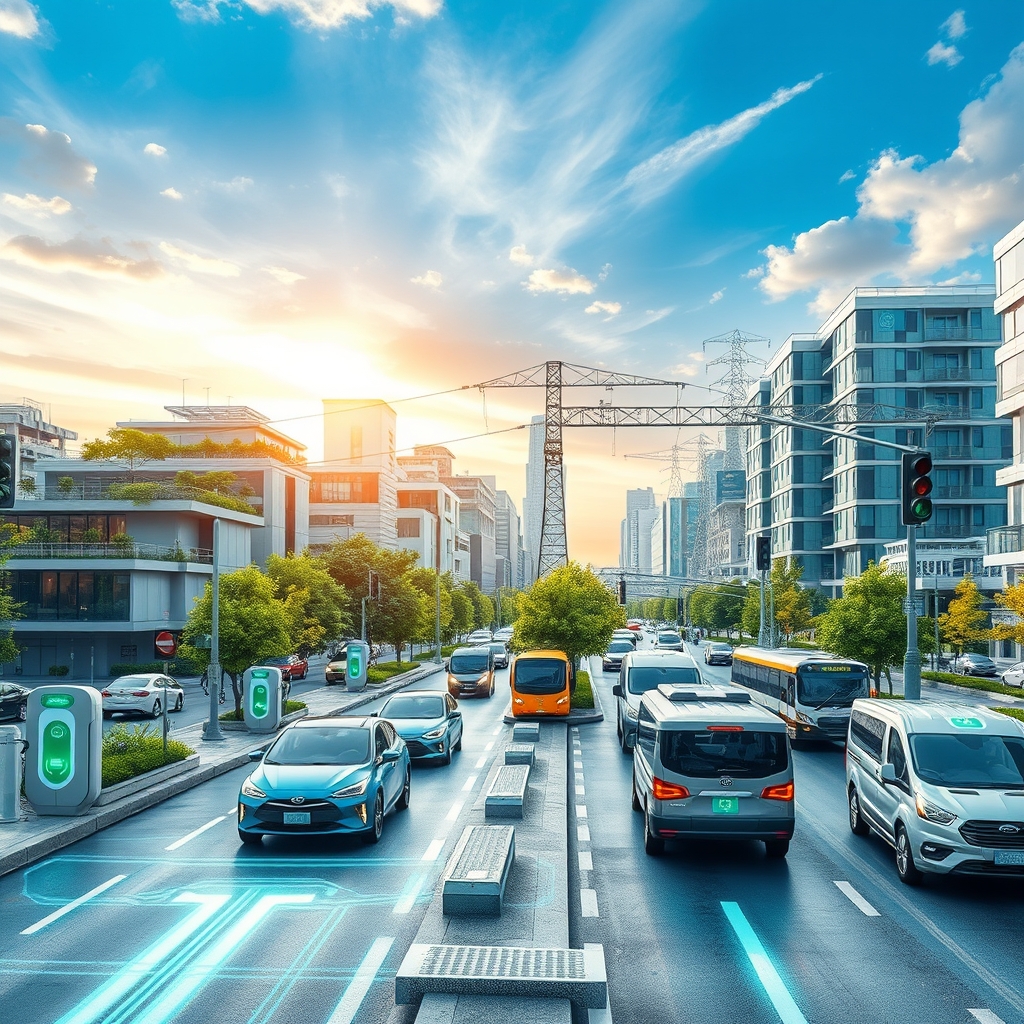
V2I technology enables communication between EVs and urban infrastructure, such as traffic lights, road sensors, and charging stations. This real-time data exchange enhances traffic management, reduces congestion, and improves road safety. For example, V2I can alert drivers to upcoming traffic jams, suggest alternative routes, or even adjust traffic light timings to optimize flow. In smart cities like Barcelona and Singapore, V2I is already being tested to create more efficient and sustainable transportation networks.
One of the most exciting applications of V2I is dynamic charging, where EVs can charge wirelessly while driving on specially equipped roads. This technology, currently being piloted in Sweden and South Korea, could eliminate range anxiety by allowing EVs to charge on the go. As V2I matures, it will also enable autonomous vehicles to navigate cities more safely and efficiently, paving the way for fully integrated smart transportation systems.
The Role of V2X in Smart Cities
Smart cities are built on the principle of connectivity—where data and technology converge to create more livable, sustainable, and efficient urban environments. V2X technology is a cornerstone of this vision, offering solutions to some of the most pressing challenges facing modern cities: energy management, traffic congestion, and environmental sustainability.
By integrating V2X into smart city infrastructure, cities can reduce their carbon footprint, lower energy costs, and enhance the quality of life for residents. For example, V2G can help cities transition to renewable energy sources by storing excess solar or wind power in EV batteries and releasing it when needed. This not only reduces reliance on fossil fuels but also makes the grid more resilient to fluctuations in renewable energy supply.
In Amsterdam, the city’s smart grid initiative leverages V2X to optimize energy distribution across neighborhoods. By using EVs as distributed energy resources, the city can balance supply and demand in real time, reducing the need for expensive and polluting peaker plants. Similarly, in Los Angeles, V2I technology is being used to reduce traffic congestion and emissions by synchronizing traffic lights with real-time traffic data, cutting travel times and fuel consumption.
Real-World Examples and Future Predictions
The potential of V2X is not just theoretical—it’s already being realized in cities and communities around the world. In the UK, the Energy Superhub Oxford project combines V2G, battery storage, and renewable energy to create a zero-carbon energy system. By 2025, the project aims to power 320 EVs with 100% renewable energy, demonstrating how V2X can accelerate the transition to a sustainable future.
Looking ahead, the adoption of V2X is expected to accelerate as governments and industries recognize its benefits. The European Union has set ambitious targets for V2X deployment, aiming to have 80% of new vehicles equipped with V2X capabilities by 2030. In the U.S., the Department of Energy is investing in V2X research and pilot projects to unlock its full potential. Meanwhile, automakers like Tesla, Ford, and Volkswagen are integrating V2X features into their next-generation EVs, signaling a shift toward a more connected and sustainable transportation ecosystem.
As V2X technology matures, its applications will expand beyond energy and transportation. For instance, V2X could enable EVs to act as mobile data centers, providing edge computing capabilities for smart city applications. It could also facilitate peer-to-peer energy trading, where EV owners buy and sell energy directly with one another, creating a decentralized energy market. The possibilities are endless, and the impact on smart cities will be profound.
The fusion of smart cities and EVs through V2X technology is more than just a technological advancement—it’s a paradigm shift in how we interact with energy, infrastructure, and the environment. By turning vehicles into active participants in the urban ecosystem, V2X is paving the way for cities that are not only smarter but also more resilient, sustainable, and responsive to the needs of their inhabitants. As this technology continues to evolve, it will redefine the boundaries of what’s possible, transforming the way we live, work, and move through the world.