The Intelligent Grid: How Next-Gen EVs Are Reshaping Our World

The automotive industry is undergoing a metamorphosis, far surpassing mere electrification. We are witnessing the birth of a new era where vehicles are no longer just modes of transport but sophisticated, intelligent, and interconnected entities. This transformation is driven by a convergence of groundbreaking technologies that promise to redefine our relationship with mobility, energy, and urban living. From their internal architecture to their interaction with the world around them, the vehicles of tomorrow are becoming active participants in our smart ecosystems, poised to enhance efficiency, sustainability, and convenience in ways previously unimaginable.
The Intelligent Core: Software Defined Vehicles and Predictive AI
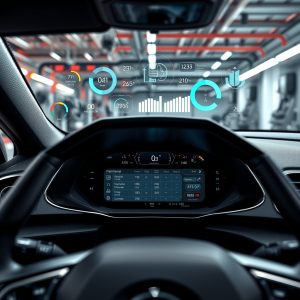
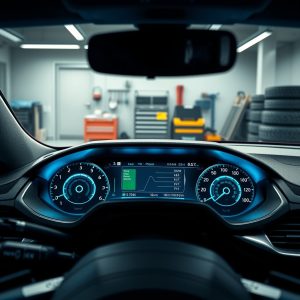
At the heart of this revolution lies the concept of the Software Defined Vehicle (SDV). Imagine a car that evolves and improves throughout its lifespan, not just through hardware upgrades, but via over-the-air software updates. SDVs decouple hardware from software, allowing manufacturers to introduce new features, enhance performance, and even fix issues remotely, long after the vehicle has left the dealership. This constant evolution means your car can become smarter, safer, and more personalized over time, adapting to your needs and the latest technological advancements.
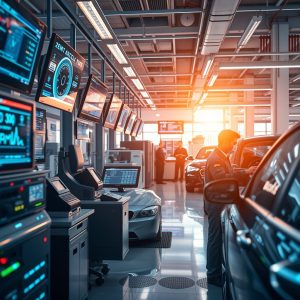
Complementing the SDV paradigm is Predictive Maintenance AI. These intelligent systems leverage vast amounts of data – from sensor readings and driving patterns to environmental conditions – to anticipate potential failures before they occur. By continuously monitoring vehicle health, AI can alert drivers and service centers to necessary maintenance, optimizing performance, extending component lifespan, and significantly reducing unexpected breakdowns. This proactive approach not only enhances safety and reliability but also contributes to the overall efficiency and longevity of the vehicle, reducing waste and improving the ownership experience.
Electrifying Efficiency: 800-Volt Architecture and Ultra-Fast Charging
The push for faster, more efficient charging is critical for mass EV adoption, and the 800-Volt Architecture is a game-changer in this regard. Traditional EVs typically operate on 400-volt systems, but doubling the voltage dramatically reduces the current required to deliver the same power. This translates to several key advantages: significantly faster charging times, less heat generation during charging, and the ability to use thinner, lighter wiring within the vehicle. For drivers, this means less time spent at charging stations and a more seamless experience.
The 800-volt system is the backbone for achieving Ultra-Fast Charging speeds, allowing EVs to regain hundreds of miles of range in mere minutes, making long-distance travel as convenient as refueling a gasoline car. This technological leap addresses one of the primary concerns of prospective EV owners – range anxiety and charging wait times – paving the way for electric vehicles to become the dominant form of personal transportation.
Beyond the Road: Bidirectional Charging and Vehicle-to-Everything (V2X)
Modern EVs are not just consumers of energy; they are becoming active contributors to the energy ecosystem. Bidirectional Charging technology allows electric vehicles to not only draw power from the grid but also to send it back. This capability opens up a world of possibilities, from powering your home during an outage (Vehicle-to-Home or V2H) to selling excess energy back to the grid during peak demand (Vehicle-to-Grid or V2G). This transforms an EV into a mobile power bank, adding immense value beyond its primary transportation function and bolstering grid stability.
Furthermore, Vehicle-to-Everything (V2X) communication is set to revolutionize road safety and traffic management. V2X allows vehicles to communicate wirelessly with other vehicles (V2V), roadside infrastructure (V2I), and even pedestrians (V2P). Imagine a world where your car receives real-time alerts about upcoming hazards, traffic congestion, or even a pedestrian stepping into the road, all before you can visually perceive them. This constant exchange of data enables a more coordinated, efficient, and safer transportation network, laying crucial groundwork for fully autonomous driving systems.
The Foundation of Innovation: Modular EV Platforms
The rapid evolution of EV technology is greatly facilitated by the adoption of Modular EV Platforms. These standardized, scalable architectures allow manufacturers to build a wide variety of vehicles – from compact city cars to large SUVs and commercial vans – all from a common underlying structure. By standardizing components like battery packs, electric motors, and chassis elements, companies can accelerate development cycles, reduce production costs, and quickly adapt to changing market demands. This modularity also makes it easier to integrate new technologies as they emerge, ensuring that future vehicles can always leverage the latest innovations without a complete redesign.
The Autonomous Horizon: Weaving it All Together
Ultimately, these disparate technologies converge to enable the grand vision of Autonomous Driving. Software Defined Vehicles provide the agile, adaptable software layers necessary to manage complex driving scenarios and integrate new AI algorithms. V2X communication offers the critical real-time environmental data that autonomous systems need to make informed decisions, extending their perception far beyond the vehicle’s onboard sensors. The efficient power delivery of 800-volt architectures ensures that these energy-intensive systems have reliable power, while modular platforms provide the flexible hardware foundation for integrating advanced sensor suites and computing power. Together, these innovations are crafting a future where vehicles navigate our world with unprecedented intelligence, seamlessly integrating into our lives as smart, sustainable, and utterly transformative machines. The journey of the electric vehicle is no longer just about propulsion; it’s about becoming a dynamic, intelligent, and interconnected entity, constantly learning, adapting, and contributing to a more efficient and sustainable world, redefining not just how we move, but how we live.