Bidirectional Charging Explained: Turning Your EV into a Power Hub
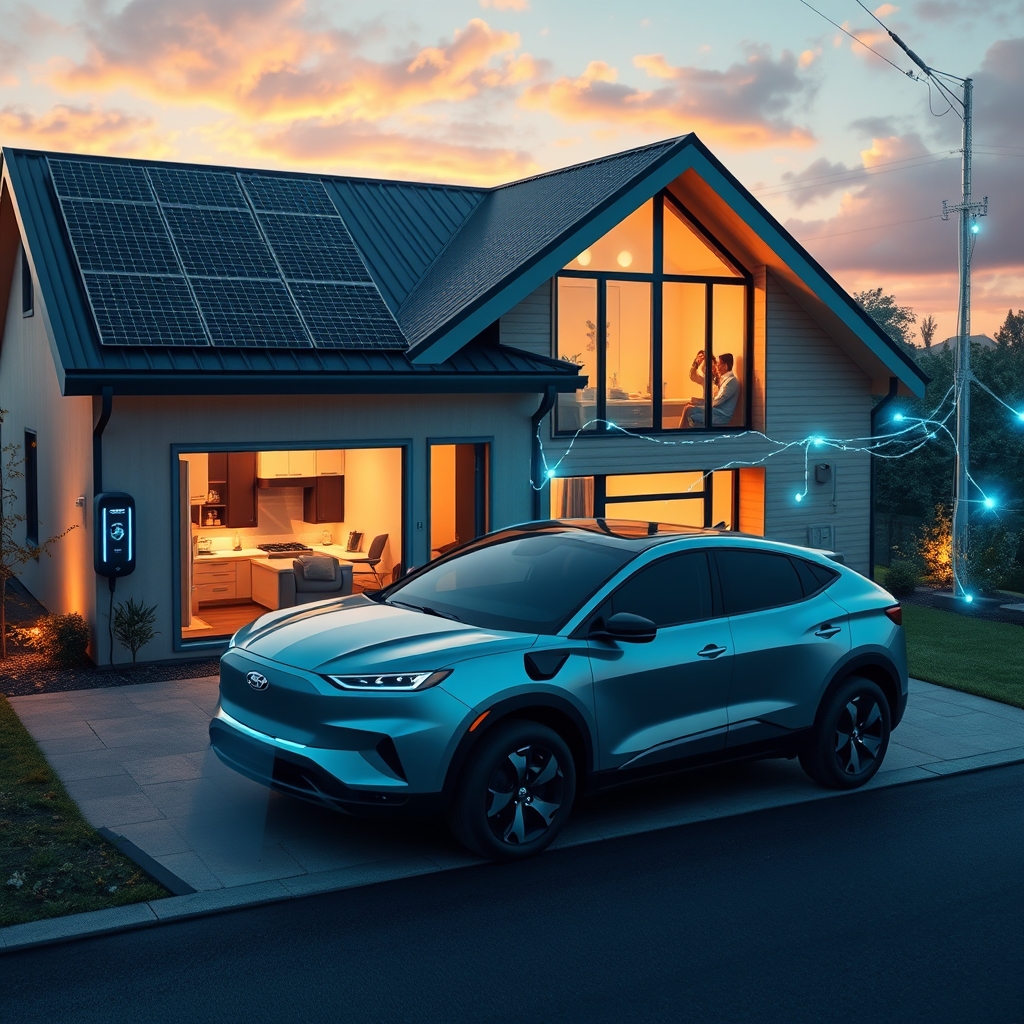
Electric vehicles (EVs) are no longer just a means of transportation—they’re evolving into mobile energy storage units that can power homes, businesses, and even the electrical grid. This transformation is made possible by bidirectional charging, a technology that allows energy to flow both into and out of an EV’s battery. While traditional charging only fills the battery, bidirectional charging turns your EV into a two-way power hub, unlocking a world of possibilities for energy management, cost savings, and sustainability.
How Bidirectional Charging Works
At its core, bidirectional charging relies on specialized hardware and software that enable an EV’s battery to discharge energy back into the grid, a home, or another device. Unlike standard chargers, which only convert AC power from the grid into DC power for the battery, bidirectional chargers can reverse this process. When needed, the EV’s battery converts stored DC power back into AC power, which can then be used to power external systems.
This technology requires three key components:
1. A Bidirectional Charger
These chargers, often referred to as Vehicle-to-Grid (V2G) or Vehicle-to-Home (V2H) chargers, are equipped with power electronics that manage the two-way flow of electricity. They must be compatible with the EV’s battery management system (BMS) to ensure safe and efficient energy transfer.
2. A Compatible EV
Not all EVs support bidirectional charging. Currently, models like the Nissan Leaf, Ford F-150 Lightning, and Hyundai Ioniq 5 are among the few that offer this capability. Automakers are gradually expanding support, but compatibility remains a limiting factor for widespread adoption.
3. Smart Energy Management Software
Bidirectional charging isn’t just about hardware—it also requires intelligent software to optimize energy flow. This software monitors grid demand, electricity prices, and battery levels to determine the best times to charge or discharge the EV. Some systems even integrate with home energy management platforms, allowing users to automate energy usage based on solar production or time-of-use rates.
The Benefits of Bidirectional Charging
Bidirectional charging isn’t just a technological novelty—it offers tangible benefits for EV owners, utilities, and the environment. Here’s how it’s reshaping energy consumption:
1. Vehicle-to-Grid (V2G): Powering the Future
V2G technology allows EVs to feed energy back into the electrical grid during peak demand, helping stabilize supply and reduce strain on power plants. Utilities can compensate EV owners for this service, turning their vehicles into revenue-generating assets. For example, in Denmark, Nissan Leaf owners have participated in V2G pilot programs, earning money by selling stored energy back to the grid during high-demand periods.
Beyond financial incentives, V2G can support the integration of renewable energy sources like wind and solar, which are intermittent by nature. By storing excess renewable energy in EV batteries and releasing it when needed, V2G helps balance supply and demand, reducing reliance on fossil fuel-based power plants.
2. Vehicle-to-Home (V2H): Backup Power on Demand
Imagine never worrying about a power outage again. With V2H, your EV can act as a backup power source for your home, providing electricity during blackouts or emergencies. The Ford F-150 Lightning, for instance, can power an average home for up to three days on a single charge, depending on usage. This capability is particularly valuable in regions prone to extreme weather or unreliable grid infrastructure.
V2H also enables cost savings by allowing homeowners to use stored EV energy during peak pricing hours, avoiding expensive utility rates. When paired with solar panels, an EV can store excess solar energy during the day and release it at night, maximizing self-consumption and reducing reliance on the grid.
3. Vehicle-to-Load (V2L): Power on the Go
Some EVs, like the Hyundai Ioniq 5 and Kia EV6, feature Vehicle-to-Load (V2L) capabilities, allowing them to power external devices directly from the battery. This is useful for camping trips, outdoor events, or even powering tools on a job site. V2L doesn’t require a bidirectional charger—just an adapter and a compatible EV—but it demonstrates the versatility of EV batteries beyond transportation.
Implementing Bidirectional Charging: A Step-by-Step Guide
Ready to turn your EV into a power hub? Here’s how to get started with bidirectional charging:
1. Check EV Compatibility
First, confirm that your EV supports bidirectional charging. Consult your vehicle’s manual or manufacturer’s website for details. If your EV isn’t compatible, keep an eye on future models—automakers are rapidly expanding support for this technology.
2. Choose the Right Charger
Select a bidirectional charger that matches your needs. For V2G applications, you’ll need a charger approved by your local utility. For V2H, look for chargers that integrate with home energy management systems, such as the Wallbox Quasar or Fermata Energy FE-15. Ensure the charger is installed by a certified electrician to meet safety and regulatory standards.
3. Install Smart Energy Software
Pair your charger with energy management software to optimize charging and discharging. Platforms like Emporia Energy or Span can help you monitor energy usage, set preferences for grid interaction, and maximize cost savings. Some utilities also offer their own software for V2G participants.
4. Connect to the Grid or Home
For V2G, coordinate with your utility to enroll in a demand response program. This may involve signing a contract and allowing the utility to control when your EV discharges energy. For V2H, work with an electrician to connect the charger to your home’s electrical panel, ensuring it can isolate from the grid during outages.
5. Monitor and Optimize
Once everything is set up, monitor your system’s performance through the energy management software. Adjust settings as needed to balance convenience, cost savings, and battery health. Over time, you’ll learn how to leverage bidirectional charging to its fullest potential.
Case Studies: Bidirectional Charging in Action
Bidirectional charging isn’t just a theoretical concept—it’s already being tested and deployed in real-world scenarios. Here are a few examples:
1. Nissan and Fermata Energy: V2G in the U.S.
In a pilot program in Tennessee, Nissan partnered with Fermata Energy to demonstrate V2G technology using Nissan Leaf EVs. Participants earned money by selling energy back to the grid during peak demand, while also reducing their electricity bills. The program highlighted the potential for V2G to provide grid services while benefiting EV owners financially.
2. The F-150 Lightning: Powering Homes in Texas
After a severe winter storm caused widespread blackouts in Texas in 2021, Ford showcased the F-150 Lightning’s V2H capabilities by powering homes during simulated outages. The truck’s Intelligent Backup Power system seamlessly switched homes to EV power, demonstrating how bidirectional charging can enhance resilience in disaster-prone areas.
3. Europe’s V2G Projects: A Sustainable Energy Future
In the Netherlands and Germany, V2G projects are integrating EVs into smart grids to support renewable energy adoption. For example, the INVADE project in Norway uses EV batteries to store excess wind and solar energy, reducing curtailment and improving grid stability. These initiatives are paving the way for a more sustainable and decentralized energy system.
The Future of Bidirectional Charging
As EV adoption grows, bidirectional charging is poised to play a central role in the energy transition. Automakers are increasingly incorporating bidirectional capabilities into new models, while utilities are exploring ways to integrate EVs into grid management. Regulatory frameworks are also evolving to support V2G and V2H applications, with incentives and standards being developed to encourage adoption.
One of the most exciting prospects is the potential for virtual power plants (VPPs), where fleets of EVs act as distributed energy resources, collectively providing grid services. Companies like Nuvve and Octopus Energy are already experimenting with VPPs, aggregating EV batteries to create a flexible and responsive energy network.
For consumers, bidirectional charging offers a path to energy independence, cost savings, and environmental stewardship. By turning EVs into mobile power hubs, we’re not just redefining transportation—we’re reimagining how energy is generated, stored, and shared. As technology advances and adoption grows, the line between vehicles and energy infrastructure will continue to blur, creating a smarter, more resilient energy future for all.
The shift toward bidirectional charging is more than a technological upgrade—it’s a fundamental rethinking of how we interact with energy. Whether it’s powering your home during an outage, selling energy back to the grid, or simply reducing your carbon footprint, your EV is no longer just a car. It’s a gateway to a new era of energy freedom, where every charge and discharge brings us closer to a sustainable and self-sufficient future.