The Invisible Pulse: How 800 Volt Architecture and Predictive Maintenance AI Are Crafting the Self-Healing Electric Vehicle
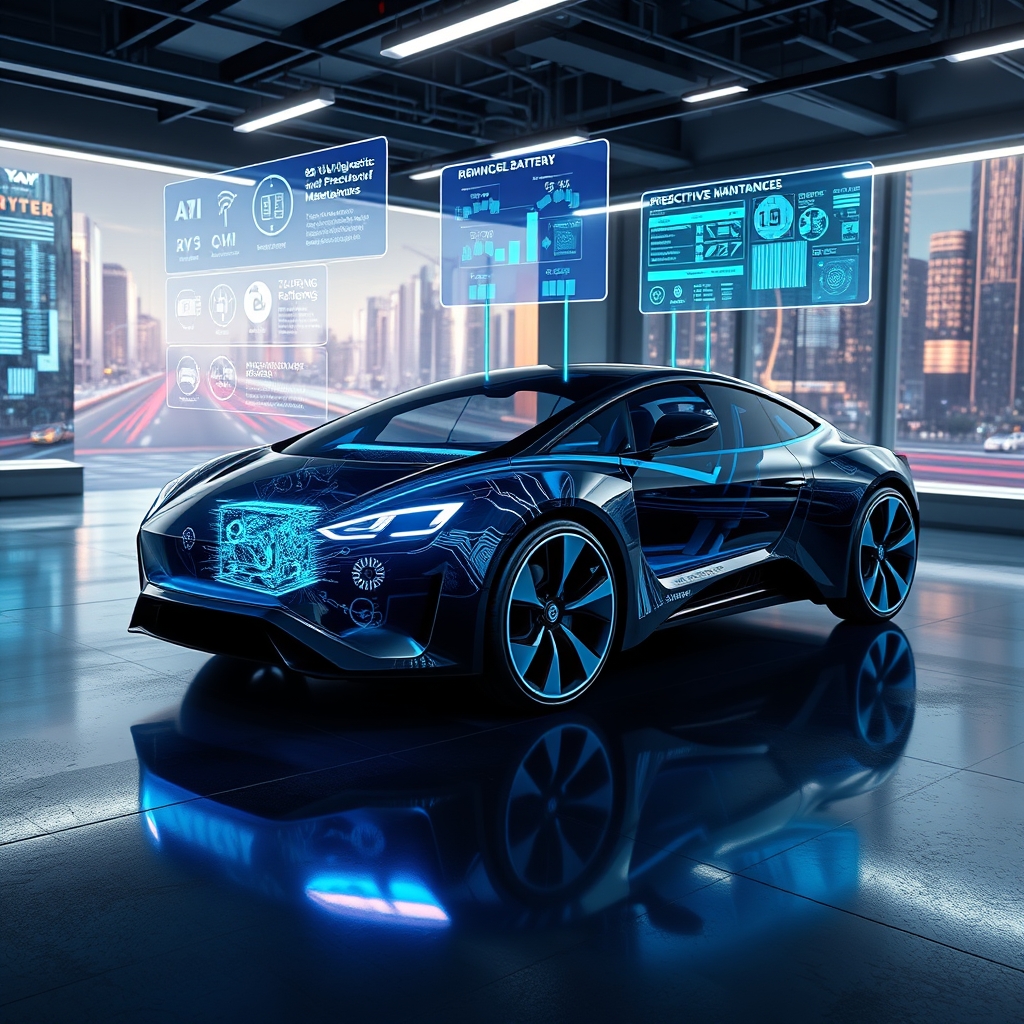
The electric vehicle (EV) revolution is no longer just about replacing the internal combustion engine with batteries. It’s about reimagining the entire automotive ecosystem—where vehicles don’t just consume energy but actively participate in an intelligent, self-sustaining network. At the heart of this transformation lies the convergence of 800 volt architecture and predictive maintenance AI, two technologies that are quietly redefining what it means for a car to be truly autonomous—not just in driving, but in its own upkeep, efficiency, and longevity.
The Voltage Leap: Why 800 Volts Are the Backbone of Next-Gen EVs
For decades, the automotive industry operated within the constraints of 400-volt systems, a standard that served early EVs but quickly became a bottleneck as demand for faster charging and greater efficiency grew. Enter 800 volt architecture, a paradigm shift that is unlocking unprecedented performance in electric mobility. By doubling the voltage, EVs can now achieve ultra-fast charging—reducing charging times from hours to minutes—while simultaneously improving energy efficiency and reducing thermal losses.
But the benefits extend far beyond speed. Higher voltage systems enable lighter wiring, more compact motors, and enhanced regenerative braking, all of which contribute to a vehicle’s overall efficiency. This is particularly critical for long-haul electric trucks and high-performance EVs, where every watt of energy must be optimized. Companies like Porsche, Hyundai, and Lucid Motors have already embraced 800-volt systems, proving that this isn’t just a theoretical advantage—it’s a tangible leap toward a more sustainable and high-performance future.
The AI Guardian: How Predictive Maintenance is Turning EVs into Self-Healing Machines
While 800-volt architecture enhances the physical capabilities of EVs, predictive maintenance AI is transforming them into intelligent, self-aware entities. Traditional vehicles rely on reactive maintenance—waiting for a part to fail before replacing it. But in the era of software-defined vehicles, this approach is as outdated as the carburetor. Predictive maintenance leverages machine learning, real-time sensor data, and historical performance analytics to anticipate failures before they occur, ensuring that EVs remain operational, efficient, and safe.
Imagine a scenario where your car’s AI detects a slight anomaly in the battery’s thermal management system weeks before it could lead to degradation. The system schedules a service appointment, orders the necessary parts, and even adjusts the vehicle’s power delivery to mitigate stress until the issue is resolved. This isn’t science fiction—it’s the reality being shaped by companies like Tesla, NVIDIA, and Bosch, which are integrating AI-driven diagnostics into their vehicles. The result? Reduced downtime, lower maintenance costs, and a longer lifespan for EV components, all of which contribute to a more sustainable automotive ecosystem.
The Synergy of Voltage and Intelligence: A Self-Sustaining Ecosystem
The true magic happens when 800-volt architecture and predictive maintenance AI converge. Higher voltage systems generate vast amounts of data—from battery health to motor efficiency—which AI can analyze in real time to optimize performance. For instance, an AI could detect that a vehicle’s battery is degrading faster than expected under high-voltage charging and dynamically adjust the charging profile to extend its lifespan. Similarly, it could identify inefficiencies in the regenerative braking system and recalibrate it for maximum energy recovery.
This synergy also extends to vehicle-to-everything (V2X) communication, where EVs share data with smart grids, traffic systems, and other vehicles. An 800-volt EV with predictive AI could, for example, communicate with a charging station to schedule a session during off-peak hours, reducing strain on the grid while ensuring the battery is charged at the optimal rate. It’s a self-regulating loop where the vehicle, infrastructure, and AI work in harmony to create a more efficient and resilient mobility network.
Beyond the Vehicle: The Ripple Effects of a Smarter EV Ecosystem
The implications of this technological convergence stretch far beyond the individual vehicle. For automakers, predictive maintenance reduces warranty costs and improves customer satisfaction by minimizing unexpected breakdowns. For fleets, it means higher uptime and lower total cost of ownership, making electric vehicles a more viable option for logistics and ride-hailing services. And for consumers, it translates to a seamless ownership experience where the car isn’t just a mode of transport but a proactive partner in mobility.
Moreover, this shift aligns with the broader goals of sustainable supply chains and the circular material economy. By extending the lifespan of EV components through predictive maintenance, we reduce the demand for raw materials and minimize waste. When combined with modular EV platforms, which allow for easier upgrades and repairs, the result is a vehicle that evolves with its owner rather than becoming obsolete.
The Road Ahead: A Future Where Cars Take Care of Themselves
The automotive industry is on the cusp of a new era—one where vehicles are no longer passive machines but active participants in their own maintenance and efficiency. The combination of 800-volt architecture and predictive maintenance AI is more than just an incremental improvement; it’s a fundamental reimagining of what a car can be. As these technologies mature, we’ll see EVs that not only drive themselves but also heal themselves, optimize their own performance, and integrate seamlessly into the broader energy ecosystem.
This isn’t just about making cars smarter; it’s about making mobility more sustainable, efficient, and resilient. The invisible pulse of innovation is already beating beneath the surface, and soon, it will redefine the way we think about transportation—one volt, one algorithm, one self-healing vehicle at a time.