
The Future of Flight on Wheels: How Aerodynamic Efficiency and Modular EV Platforms Are Shaping Next-Gen Mobility
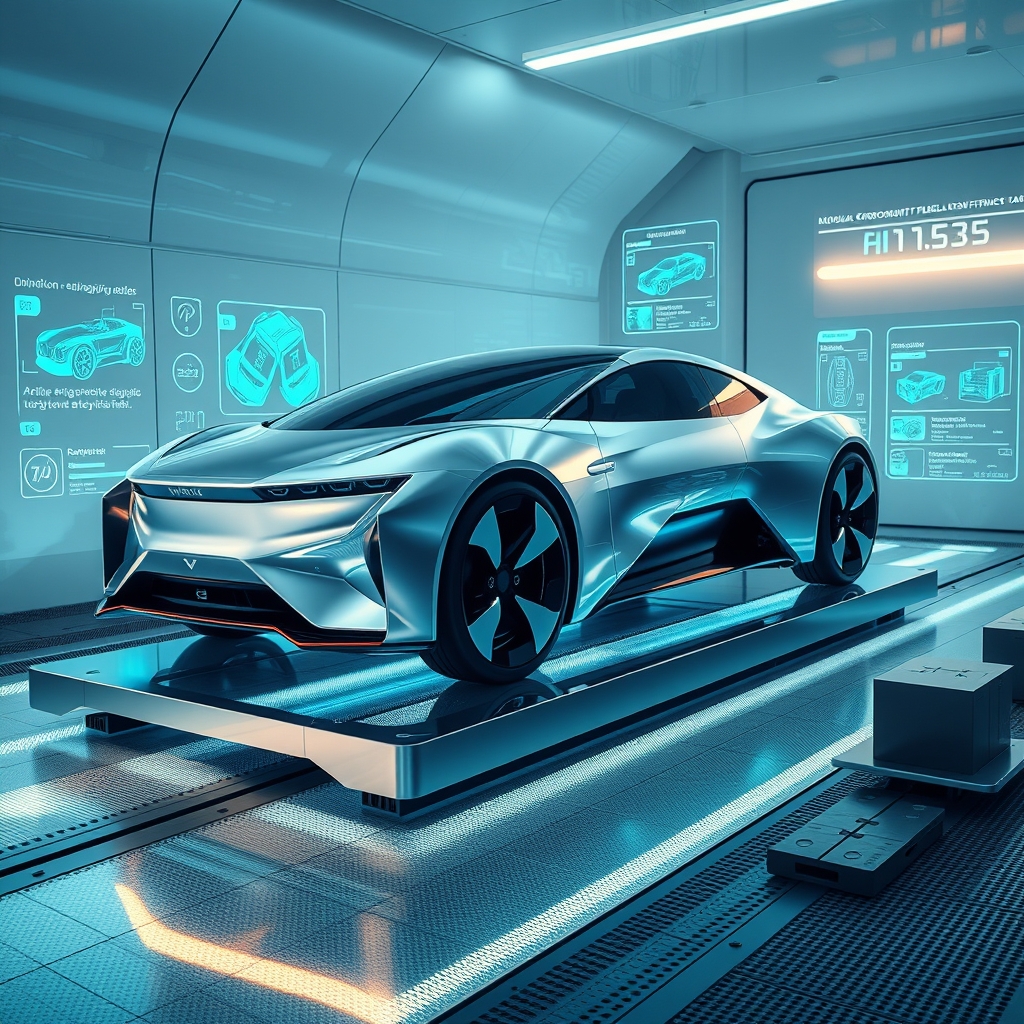
The automotive industry is undergoing a transformation so profound that it feels less like evolution and more like a leap into the future. At the heart of this shift lies a relentless pursuit of efficiency, sustainability, and intelligence—principles that are redefining what it means to move from point A to point B. Among the most groundbreaking advancements are aerodynamic efficiency and modular EV platforms, two innovations that are not just improving vehicles but fundamentally reshaping the very fabric of mobility. Together, they promise a future where cars are not only cleaner and smarter but also more adaptable and seamlessly integrated into our lives.
The Art and Science of Aerodynamic Efficiency
Aerodynamics has long been a cornerstone of automotive design, but in the era of electric vehicles (EVs), it has taken on a new level of urgency. Unlike internal combustion engines, which can rely on brute force to overcome inefficiencies, EVs demand a more nuanced approach. Every watt of energy saved through reduced drag translates directly into extended range, lower battery demands, and a smaller environmental footprint. This is where aerodynamic efficiency becomes not just a design consideration but a critical enabler of the electric revolution.
Modern EVs are pushing the boundaries of what’s possible with sleek, sculpted bodies that minimize air resistance. Active aerodynamic features, such as adjustable spoilers, grille shutters, and even morphing body panels, are becoming commonplace. These innovations allow vehicles to dynamically adapt to driving conditions, optimizing airflow in real time. For instance, at high speeds, a car might lower its ride height and close off air intakes to reduce drag, while in stop-and-go traffic, it could prioritize cooling and ventilation. The result is a vehicle that doesn’t just perform better but also feels more alive, as if it’s in constant dialogue with its environment.
But aerodynamic efficiency isn’t just about speed or range—it’s also about sustainability. By reducing energy consumption, EVs can rely on smaller, lighter batteries, which in turn lowers the demand for rare earth minerals and reduces the overall weight of the vehicle. This creates a virtuous cycle where efficiency begets sustainability, and sustainability drives further innovation. It’s a reminder that in the world of next-gen mobility, every detail matters, and every design choice has a ripple effect across the entire ecosystem.
The Rise of Modular EV Platforms: A Foundation for the Future
If aerodynamics is the art of shaping the future, then modular EV platforms are the foundation upon which that future is built. These platforms represent a paradigm shift in automotive manufacturing, moving away from the rigid, model-specific architectures of the past toward flexible, scalable designs that can adapt to a wide range of vehicles and use cases. At their core, modular platforms are about one thing: versatility. They allow automakers to build everything from compact city cars to long-range SUVs on the same underlying structure, reducing development costs, accelerating time-to-market, and enabling a level of customization that was once unimaginable.
One of the most compelling aspects of modular EV platforms is their ability to integrate advanced technologies seamlessly. For example, a single platform can accommodate different battery sizes, motor configurations, and even alternative power sources like hydrogen fuel cells or solid-state batteries. This flexibility is crucial in an industry where consumer preferences and regulatory landscapes are evolving at breakneck speed. Automakers can future-proof their offerings by designing platforms that are not just adaptable today but also ready for the innovations of tomorrow, whether that means ultra-fast charging, bidirectional charging, or even vehicle-to-everything (V2X) communication.
Modular platforms also play a key role in sustainability. By standardizing components and reducing the need for model-specific tooling, they minimize waste and lower the environmental impact of manufacturing. Additionally, their scalability makes it easier to incorporate circular material economies, where materials are reused, recycled, or repurposed at the end of a vehicle’s life. This aligns perfectly with the broader industry shift toward a more sustainable and responsible approach to mobility, where the goal is not just to build better cars but to create a better world.
Beyond the Road: The Broader Implications of Aerodynamics and Modularity
The impact of aerodynamic efficiency and modular EV platforms extends far beyond the vehicles themselves. These innovations are reshaping entire industries, from manufacturing and logistics to urban planning and energy infrastructure. For instance, the shift toward modular platforms is driving a new wave of collaboration between automakers and tech companies, as both seek to leverage each other’s expertise in software, hardware, and data analytics. This convergence is giving rise to software-defined vehicles that are as much about code as they are about mechanics, blurring the lines between the automotive and tech sectors.
Meanwhile, the focus on aerodynamics is influencing everything from the design of charging stations to the layout of highways. Smarter, more efficient vehicles require smarter, more efficient infrastructure, and this is prompting cities to rethink how they design roads, bridges, and even parking structures. For example, aerodynamic EVs benefit from smoother, more streamlined charging stations that reduce wind resistance during charging, while modular platforms enable the development of multi-purpose urban mobility hubs where vehicles can be quickly reconfigured for different tasks, from ride-sharing to last-mile delivery.
Perhaps most exciting of all is the way these innovations are enabling entirely new forms of mobility. Urban air mobility (UAM), for instance, is no longer the stuff of science fiction but a rapidly approaching reality. Companies are already testing electric vertical takeoff and landing (eVTOL) aircraft that leverage many of the same principles as ground-based EVs, including aerodynamic efficiency and modular design. These vehicles could revolutionize urban transportation, offering a faster, cleaner alternative to traditional cars and public transit. And because they’re built on modular platforms, they can be easily adapted for different use cases, from passenger transport to cargo delivery.
The Human Element: Designing for People, Not Just Performance
Amid all the talk of efficiency, sustainability, and technology, it’s easy to forget that at the heart of every innovation is a simple truth: mobility is about people. The best advancements are those that not only push the boundaries of what’s possible but also enhance the human experience. Aerodynamic efficiency and modular platforms are no exception. They’re not just about making cars faster or more efficient—they’re about making them more enjoyable, more accessible, and more aligned with the way we live.
Take, for example, the role of aerodynamics in improving comfort. A well-designed aerodynamic vehicle isn’t just quieter and more stable at high speeds—it also creates a more pleasant in-cabin experience. Reduced wind noise means clearer conversations, better audio quality, and a more relaxing ride. Meanwhile, modular platforms enable automakers to offer a wider range of customization options, from interior layouts to advanced features like smart glass roofs or in-cabin intelligence systems that adapt to the driver’s preferences. These innovations are transforming the car from a mere mode of transport into a personalized space that reflects the driver’s lifestyle and values.
There’s also a deeper, more philosophical shift at play. As vehicles become more efficient and adaptable, they’re also becoming more integrated into our daily lives. The rise of predictive maintenance AI means that cars can now anticipate issues before they arise, reducing downtime and giving drivers greater peace of mind. Meanwhile, features like bidirectional charging are turning EVs into mobile energy hubs that can power homes, support the grid, or even charge other vehicles. This level of integration is blurring the lines between the car and the rest of our lives, creating a seamless, interconnected experience where mobility is no longer a separate activity but a natural extension of how we live, work, and play.
The road ahead is paved with possibilities, each more exciting than the last. As aerodynamic efficiency and modular EV platforms continue to evolve, they’re not just changing the way we think about cars—they’re redefining what it means to move through the world. The vehicles of tomorrow will be cleaner, smarter, and more adaptable, but more importantly, they’ll be designed with people at their core. Whether it’s the quiet hum of an aerodynamically optimized EV gliding down the highway or the seamless versatility of a modular platform that adapts to every journey, one thing is clear: the future of mobility is not just about getting from point A to point B. It’s about doing so in a way that’s effortless, sustainable, and deeply human.