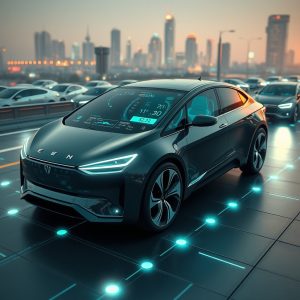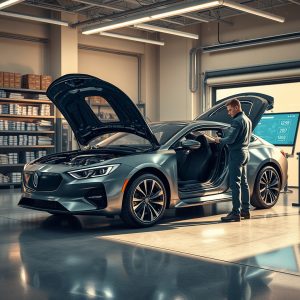
The Rise of Modular EV Platforms: What It Means for Car Enthusiasts
The automotive industry is undergoing one of its most transformative phases in history, driven by the rapid adoption of electric vehicles (EVs). At the heart of this revolution lies the concept of modular EV platforms—a game-changing approach that promises to redefine how cars are designed, built, and experienced. For car enthusiasts, this shift is not just about electrification; it’s about unlocking new levels of customization, performance, and innovation that were previously unimaginable.
The Foundation of Modular EV Platforms
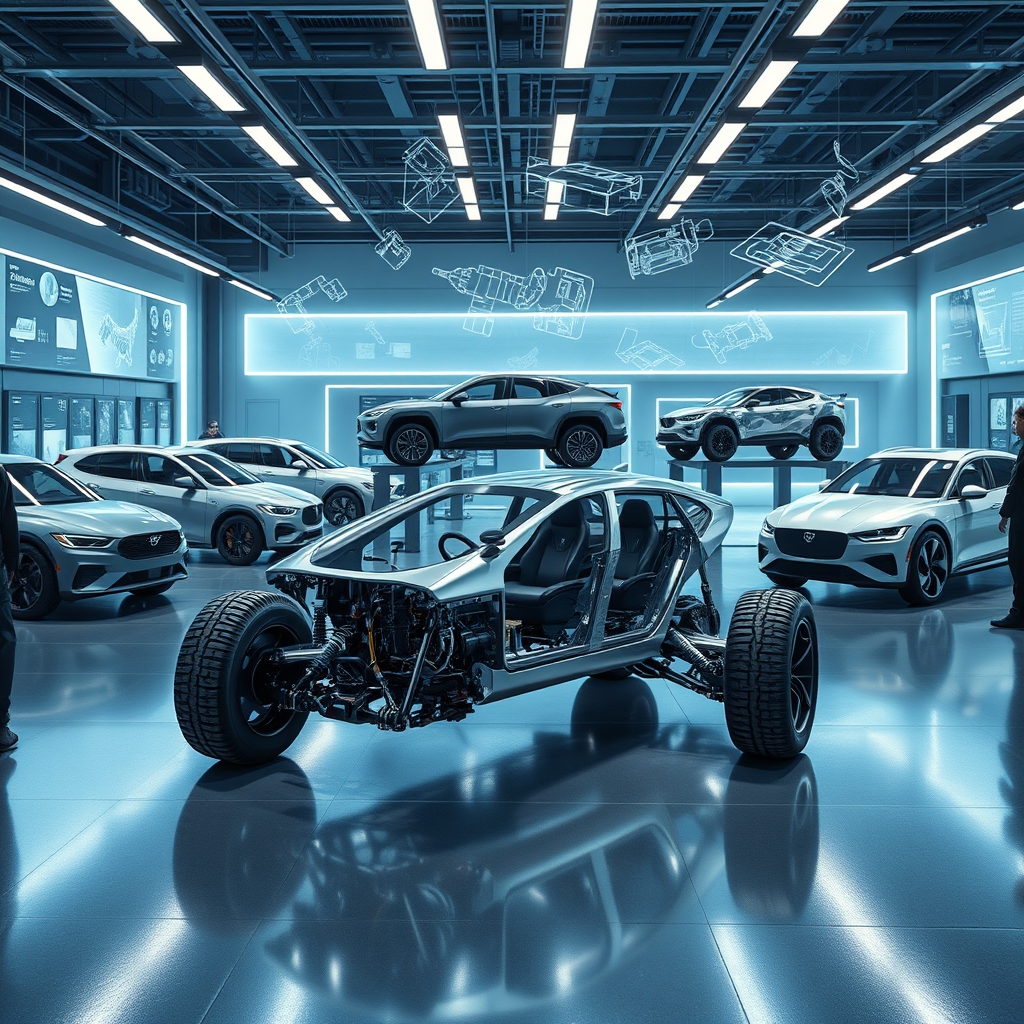
Modular EV platforms are essentially flexible architectures that serve as the backbone for multiple vehicle models. Unlike traditional platforms, which are often rigid and model-specific, modular designs allow manufacturers to mix and match components—such as batteries, motors, and chassis—across different vehicle types. This scalability is a cornerstone of the EV era, enabling automakers to streamline production while catering to diverse market demands.
One of the most prominent examples of this approach is Volkswagen’s MEB (Modular Electric Drive Matrix) platform, which underpins models ranging from the compact ID.3 to the spacious ID. Buzz. Similarly, Tesla’s platform strategy has evolved from the original Model S architecture to the more versatile platforms used in the Model 3, Model Y, and Cybertruck. These platforms are not just about sharing parts; they’re about creating a foundation that can adapt to future technological advancements without requiring a complete redesign.
Customization: A Dream for Enthusiasts
For car enthusiasts, the rise of modular platforms is a double-edged sword. On one hand, it democratizes access to cutting-edge technology, making high-performance EVs more affordable and widely available. On the other hand, it introduces a level of customization that was once the exclusive domain of aftermarket tuners and bespoke builders.
Modular platforms allow manufacturers to offer a wider range of configurations straight from the factory. For instance, a single platform can support different battery sizes, motor layouts (front-wheel, rear-wheel, or all-wheel drive), and even varying levels of autonomous driving capabilities. This means that buyers can tailor their vehicles to their specific needs—whether it’s prioritizing range for long road trips or performance for spirited driving.
Moreover, the modular approach opens the door to third-party modifications. Companies like Rivian and Lucid Motors are already exploring ways to allow owners to upgrade software, battery packs, or even drivetrain components over time. This level of flexibility ensures that an EV can evolve alongside its owner’s preferences, much like how a classic car might be restored or modified over decades.
The Performance Paradigm
Performance has always been a key consideration for car enthusiasts, and modular EV platforms are pushing the boundaries of what’s possible. Electric motors offer instant torque and precise power delivery, but the way they’re integrated into a vehicle can dramatically impact driving dynamics. Modular platforms allow engineers to experiment with different motor placements—such as dual-motor setups for all-wheel drive or tri-motor configurations for hypercars like the Tesla Model S Plaid.
Additionally, the low center of gravity provided by floor-mounted battery packs enhances handling and stability, making EVs inherently more agile than their internal combustion counterparts. This advantage is further amplified by the ability to fine-tune suspension systems and weight distribution across different models. For enthusiasts, this means that even mainstream EVs can deliver a driving experience that rivals—or surpasses—that of traditional sports cars.
Challenges and Considerations
While the benefits of modular EV platforms are undeniable, they are not without challenges. One of the primary concerns is the potential for homogenization. If multiple manufacturers rely on similar modular architectures, there’s a risk that vehicles could start to feel generic, losing the unique character that defines brands like Porsche, BMW, or Ferrari. Enthusiasts cherish the distinctiveness of their favorite marques, and the industry must strike a balance between efficiency and individuality.
Another challenge is the pace of technological advancement. EVs are evolving at a breakneck speed, with improvements in battery chemistry, charging infrastructure, and software occurring almost yearly. Modular platforms must be designed with enough flexibility to accommodate these changes without becoming obsolete. This requires significant investment in research and development, as well as a willingness to iterate quickly—a tall order for traditional automakers accustomed to longer product cycles.
Finally, there’s the question of cost. While modular platforms can reduce production expenses in the long run, the initial development costs are substantial. Smaller automakers may struggle to compete, potentially leading to consolidation in the industry. For enthusiasts, this could mean fewer choices in the market, particularly for niche or boutique brands that can’t afford to develop their own platforms.
The Future of Driving Passion
Despite these challenges, the rise of modular EV platforms represents an exciting opportunity for car enthusiasts. The ability to customize, upgrade, and personalize vehicles in ways that were previously impossible is a thrilling prospect. Imagine a world where your EV can be fitted with a larger battery for a cross-country road trip, then swapped back to a performance-oriented setup for a weekend at the track. Or where software updates not only improve autonomy but also enhance throttle response and handling characteristics.
Moreover, modular platforms are accelerating the development of new vehicle types, from compact urban runabouts to rugged off-road adventurers. This diversity ensures that there’s an EV for every type of enthusiast, whether you’re drawn to the raw acceleration of a Tesla Model S or the rugged capability of a Rivian R1T. As the technology matures, we can expect even more innovation, with platforms supporting everything from hydrogen fuel cells to advanced AI-driven driving systems.
The shift to modular EV platforms is more than just a technological evolution; it’s a cultural one. It challenges the traditional notions of what a car can be and how it can adapt to the needs of its owner. For car enthusiasts, this is a moment of immense possibility—a chance to redefine the relationship between driver and machine in an era where the only constant is change. The road ahead is electric, and it’s paved with opportunities to create something truly extraordinary.