
The Unseen Backbone: How Sustainable Supply Chains and Circular Material Economy Are Redefining Automotive Innovation
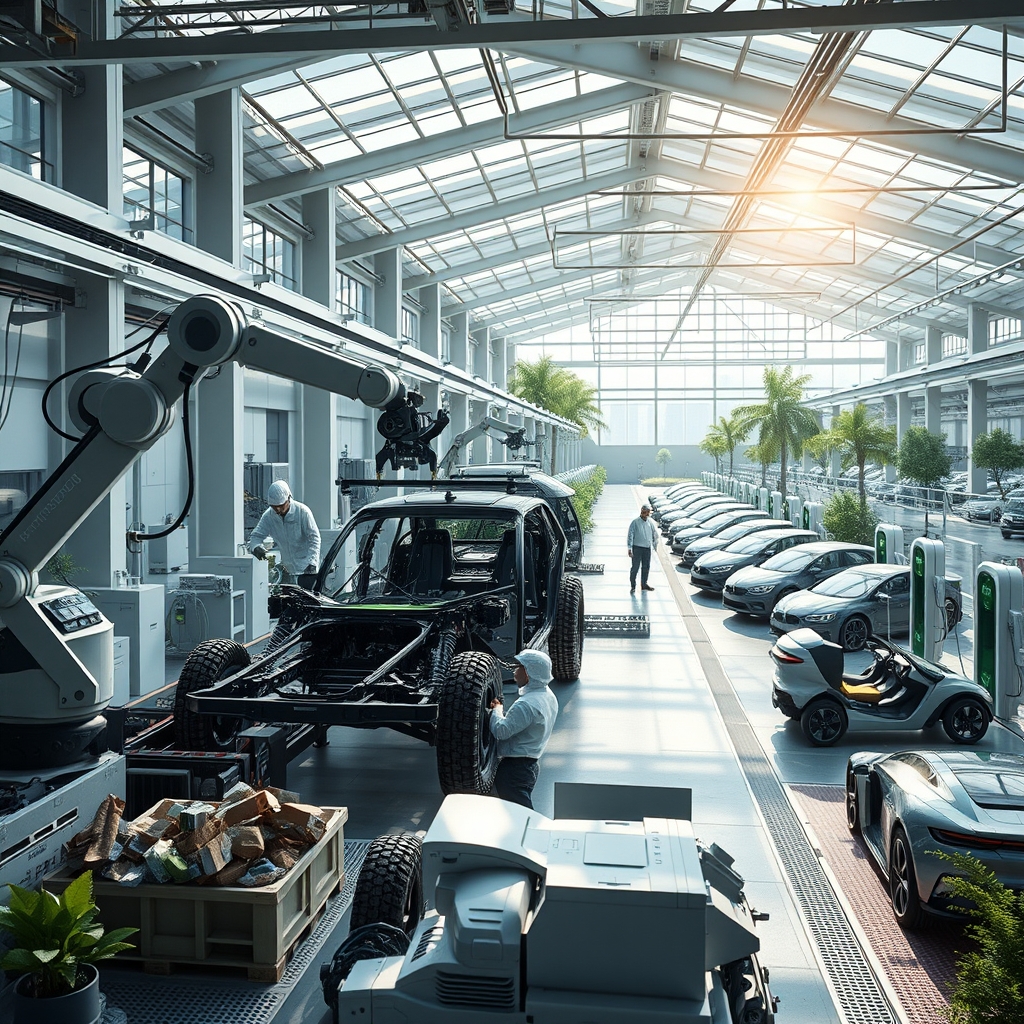
The automotive industry is undergoing a seismic shift, not just in how vehicles are powered or driven, but in the very materials and processes that bring them to life. At the heart of this transformation lies a dual revolution: the push for sustainable supply chains and the adoption of a circular material economy. These aren’t just buzzwords—they’re the foundation of a future where mobility is as kind to the planet as it is cutting-edge.
The Hidden Cost of Progress
For decades, the automotive sector has relied on linear supply chains—extract, produce, use, discard. This model has fueled innovation but at a staggering environmental cost. Mining for rare earth metals, carbon-intensive manufacturing, and the mountains of waste generated by end-of-life vehicles have left an indelible mark on the planet. The shift toward electric vehicles (EVs) and advanced mobility solutions only amplifies these challenges. Batteries require lithium, cobalt, and nickel; lightweight materials demand carbon fiber; and hydrogen fuel cells need platinum. The question isn’t just how to source these materials, but how to do so responsibly.
Enter sustainable supply chains. These are systems designed to minimize environmental impact while maximizing social and economic benefits. They prioritize ethical sourcing, reduce carbon footprints, and ensure transparency at every stage. For instance, automakers are increasingly partnering with mining companies that adhere to strict environmental and labor standards. Some are even exploring urban mining—recovering valuable materials from electronic waste and old vehicles—to reduce reliance on virgin resources. The goal? A supply chain that doesn’t just deliver parts, but preserves the planet.
The Circular Economy: Closing the Loop
If sustainable supply chains are the first step, the circular material economy is the leap toward a truly regenerative system. Unlike the linear model, a circular economy aims to keep materials in use for as long as possible, extracting maximum value before recovering and regenerating them at the end of their lifecycle. In the automotive world, this means designing vehicles with disassembly in mind, using recyclable or biodegradable materials, and creating closed-loop systems where waste from one process becomes input for another.
Take carbon fiber chassis, for example. Traditionally, carbon fiber has been difficult to recycle, but new technologies are emerging that allow it to be broken down and reused without losing its structural integrity. Similarly, bio-synthetic leather—made from plant-based or lab-grown materials—offers a cruelty-free and sustainable alternative to traditional leather, reducing the industry’s reliance on animal agriculture and petroleum-based synthetics. Even batteries, the lifeblood of EVs, are being reimagined. Companies are developing methods to recover up to 95% of the materials in lithium-ion batteries, ensuring that the shift to electric doesn’t come at the expense of the environment.
From Waste to Wealth: The Role of Innovation
The transition to a circular economy isn’t just about recycling—it’s about rethinking the entire lifecycle of a vehicle. Modular EV platforms are a prime example. By designing vehicles with interchangeable parts, automakers can extend the lifespan of their products, reduce waste, and make repairs more cost-effective. Imagine a world where a single modular EV platform can be adapted for sedans, SUVs, or even urban air mobility vehicles, with components that can be easily upgraded or replaced. This not only reduces the need for new materials but also makes mobility more accessible and adaptable.
Another game-changer is the use of predictive maintenance AI. By leveraging data and machine learning, automakers can anticipate when a part is likely to fail and replace it before it causes a breakdown. This not only improves vehicle reliability but also reduces waste by ensuring that parts are only replaced when absolutely necessary. When combined with regenerative braking systems, which capture and reuse energy that would otherwise be lost, the result is a vehicle that’s not just efficient, but actively contributing to its own sustainability.
The Ripple Effect: Beyond the Vehicle
The benefits of sustainable supply chains and a circular material economy extend far beyond the automotive industry. By reducing waste and emissions, these systems help combat climate change, conserve natural resources, and create jobs in emerging green industries. They also foster innovation, as companies are forced to rethink traditional processes and explore new materials and technologies. For example, the development of liquid hydrogen storage systems has the potential to revolutionize not just mobility, but energy storage as a whole, enabling a shift toward a hydrogen-based economy.
Moreover, these systems align with broader societal shifts toward sustainability. Consumers are increasingly demanding transparency and accountability from the brands they support. A vehicle built with recycled materials, powered by renewable energy, and designed for longevity isn’t just a product—it’s a statement. It reflects a commitment to a future where progress and sustainability go hand in hand.
The Road Ahead: Challenges and Opportunities
Despite the promise, the transition to sustainable supply chains and a circular material economy is not without its challenges. The automotive industry is complex, with global supply chains that span continents and involve countless stakeholders. Coordinating these efforts requires collaboration, investment, and a willingness to disrupt the status quo. There are also technical hurdles to overcome, such as developing cost-effective recycling methods for advanced materials or ensuring that bio-based alternatives meet the same performance standards as their traditional counterparts.
Yet, the opportunities far outweigh the challenges. Governments are beginning to recognize the importance of these systems, with policies and incentives that encourage sustainable practices. The European Union’s End-of-Life Vehicles Directive, for example, sets targets for recycling and recovery, pushing automakers to design with sustainability in mind. Meanwhile, startups and established players alike are investing in circular economy solutions, from battery recycling plants to AI-driven supply chain optimization tools.
As the automotive industry continues to evolve, the focus on sustainability will only intensify. The vehicles of the future won’t just be defined by their speed, range, or autonomous capabilities—they’ll be judged by their impact on the planet. The shift toward sustainable supply chains and a circular material economy isn’t just a trend; it’s a necessity. It’s the unseen backbone of a mobility revolution that’s as much about preserving the Earth as it is about redefining how we move. And in this revolution, every material, every process, and every decision counts. The road ahead is long, but the destination—a future where innovation and sustainability coexist—is well worth the journey.