The Electrified Highway: Navigating the Future of Heavy-Duty Fleets
The roar of diesel engines has long been synonymous with the backbone of global commerce, but a seismic shift is underway. Fleet electrification is no longer a distant dream but a rapidly accelerating reality, transforming the heavy-duty trucking industry from the ground up. This monumental transition promises not only reduced emissions and operating costs but also a complete rethinking of logistics, energy infrastructure, and vehicle capabilities. The journey towards a fully electric fleet is paved with innovation, driven by a suite of cutting-edge technologies that are redefining what a truck can be and do.
Powering the Electric Revolution: Beyond the Basics
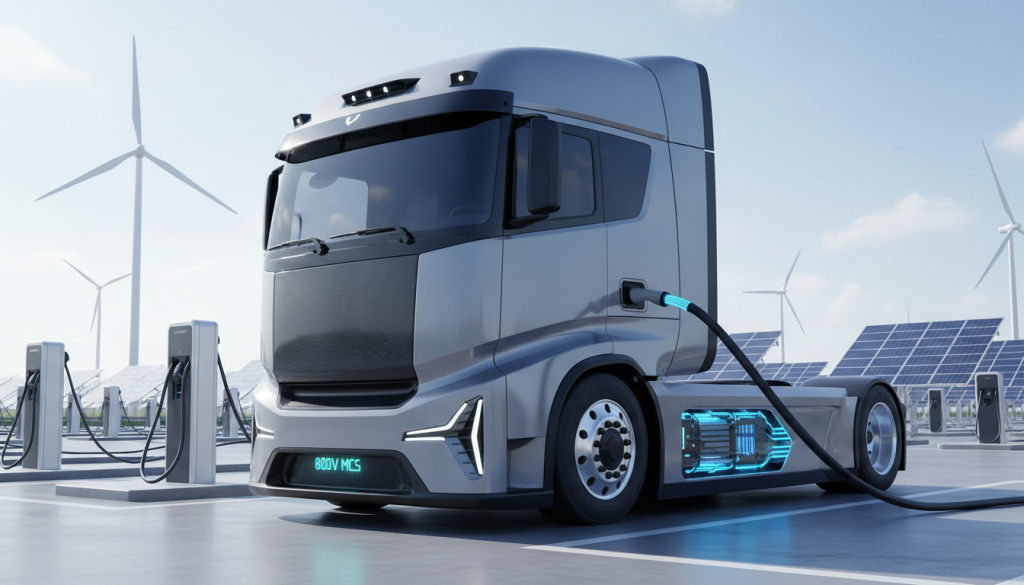
At the heart of this transformation lies a profound evolution in power delivery and storage. The adoption of an 800V Architecture is a game-changer, allowing for faster charging times and more efficient power transfer throughout the vehicle’s systems. This higher voltage system significantly reduces current, leading to less heat generation and smaller, lighter cabling, which in turn contributes to greater overall efficiency and range. Complementing this is the emergence of Mega Watt Charging (MCS), a standard designed to rapidly replenish the massive battery packs required by heavy-duty trucks. Imagine pulling into a charging depot and powering up your electric semi in a fraction of the time it takes today, minimizing downtime and maximizing operational hours. These advancements are crucial for making electric heavy-duty vehicles practical for long-haul operations.
The efficiency gains aren’t just about voltage and charging speed; they’re also deeply embedded in component technology. Silicon Carbide (SiC) Inverters are replacing traditional silicon-based inverters, offering superior performance, higher power density, and reduced energy losses. This translates directly into more power delivered to the wheels and less wasted as heat, extending range and improving overall system reliability. Furthermore, robust thermal management is paramount for these high-power systems. Liquid Cooled Battery packs are becoming standard, ensuring optimal operating temperatures for the battery cells, which is vital for their longevity, safety, and consistent performance under demanding heavy-duty cycles. These integrated technologies form the bedrock of a reliable and powerful electric propulsion system.
Smart Energy: Optimizing Every Electron
Electrification isn’t just about replacing combustion engines; it’s about smarter energy management. Bidirectional Charging is set to unlock new levels of flexibility for fleet operators. This technology allows electric trucks to not only draw power from the grid but also feed excess energy back into it, acting as mobile energy storage units. During peak demand hours, a parked fleet could contribute to grid stability, potentially generating revenue or offsetting charging costs. This capability transforms a fleet from a mere consumer of energy into an active participant in the energy ecosystem. Coupled with this is Predictive Energy Management, which uses advanced algorithms and real-time data – including route topography, traffic conditions, weather, and driver behavior – to optimize energy consumption. By intelligently anticipating energy needs and regeneration opportunities, such as through advanced Regenerative Braking systems, trucks can maximize their range and minimize energy waste, ensuring that every electron is utilized effectively.
Beyond the Powertrain: The Digital Evolution
The shift to electric powertrains is just one facet of the modern trucking revolution. The industry is rapidly embracing Software Defined Trucking, where vehicle functionalities and performance characteristics are increasingly controlled and updated through software rather than solely hardware. This paradigm enables unparalleled customization and continuous improvement. Imagine a truck whose driving dynamics or energy management profile can be tailored for specific routes or loads with a simple software update. This flexibility is further enhanced by Over The Air (OTA) Refinements, allowing manufacturers to deploy software updates, security patches, and even new features directly to the vehicle without requiring a trip to a service center. This not only improves uptime but also ensures that trucks remain at the cutting edge of technology throughout their operational life.
Perhaps the most transformative aspect of this digital evolution is the march towards Autonomous Trucking. With Level 4 Autonomy, trucks are designed to handle all driving functions under specific conditions, without human intervention. This technology promises to revolutionize safety, efficiency, and driver availability. Autonomous electric trucks, guided by sophisticated sensors and AI, can optimize routes, maintain consistent speeds, and operate around the clock, dramatically improving logistics efficiency and reducing operational costs. The synergy between electric propulsion and autonomous capabilities creates a powerful platform for a safer, greener, and more efficient future for freight transport.
The convergence of these advanced technologies – from high-voltage architectures and megawatt charging to intelligent energy management and autonomous capabilities – paints a vivid picture of the future of heavy-duty fleets. It’s a future where trucks are not just vehicles, but intelligent, interconnected nodes in a smart logistics network, capable of optimizing their own performance, interacting with the energy grid, and operating with unprecedented levels of safety and efficiency. The journey is complex, requiring significant investment in infrastructure and ongoing innovation, but the destination is clear: a sustainable, highly efficient, and technologically advanced heavy-duty transport system that will serve as the backbone of tomorrow’s economy.