The Road Ahead: Navigating the Revolutionary Future of Automotive Technology
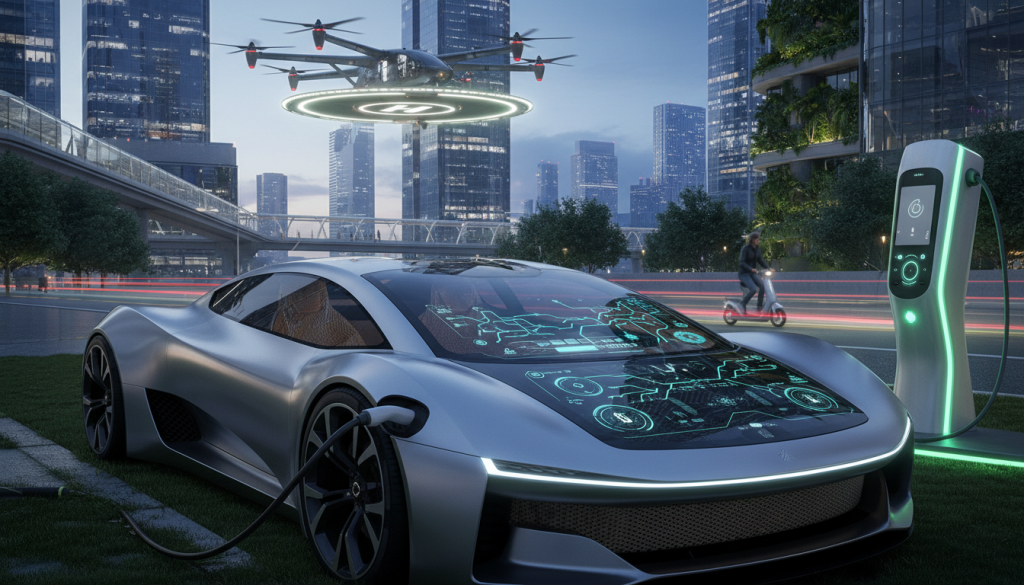
The automotive industry is in the midst of an unprecedented transformation, shifting gears from traditional combustion engines to a future powered by innovation. Are you ready to explore a world where your car isn’t just a mode of transport but a sophisticated, intelligent, and sustainable companion? A significant part of this evolution centers around robust Electric Vehicle Infrastructure, which is rapidly expanding to support the next generation of mobility.
This dynamic shift isn’t merely about swapping fuel types; it encompasses every facet of vehicle design, manufacturing, and user experience. From advanced energy solutions to hyper-connected driving environments, the automotive landscape is poised for a revolution.
Powering Tomorrow: The Evolution of Electric Vehicle Infrastructure and Energy Storage
As the energy landscape evolves, the backbone of future mobility lies in a comprehensive **Electric Vehicle Infrastructure**. This includes not only widespread public charging stations but also smart home charging solutions and ultra-fast highway charging hubs. These systems are designed to make EV ownership as convenient, if not more so, than traditional fueling.
A fascinating development within this ecosystem is **Bidirectional Charging**, which allows EVs to not only draw power from the grid but also feed electricity back into it. This capability can stabilize energy grids, power homes during outages, and even generate revenue for vehicle owners. It transforms the EV from a mere consumer of energy into an active participant in the energy market.
Beyond Lithium-Ion: The Promise of Solid State Batteries and Regenerative Braking
The quest for greater range, faster charging, and enhanced safety is driving innovation in battery technology. **Solid State Batteries** are emerging as a game-changer, promising higher energy density, improved thermal stability, and quicker charging times compared to their liquid electrolyte counterparts. This technology could unlock new possibilities for electric vehicle performance.
Complementing advanced battery designs, **Regenerative Braking** systems continue to evolve, capturing kinetic energy typically lost during deceleration and converting it back into electrical energy. This efficient energy recovery significantly extends driving range and reduces wear on conventional brakes, enhancing both sustainability and vehicle longevity.
Hydrogen Fuel Cells: A Parallel Path to Zero Emissions
While battery-electric vehicles dominate much of the current discussion, **Hydrogen Fuel Cells** represent another compelling zero-emission solution, particularly for heavy-duty transport and long-haul applications. These vehicles offer rapid refueling and long ranges, addressing specific use cases where battery charging times might be a constraint. Their development continues to progress, offering a diverse approach to sustainable mobility.
Intelligent Mobility: Autonomous Driving Systems and Connected Car Ecosystems
Beyond powering the vehicle itself, the way we interact with and operate our cars is undergoing a radical change. **Autonomous Driving Systems** are moving from experimental prototypes to increasingly capable real-world applications. These systems, ranging from partial to full self-driving, promise to enhance safety, reduce traffic congestion, and free up commute time.
Supporting this revolution are sophisticated **Advanced Driver Assistance** systems (ADAS), which are already prevalent in many new vehicles. Features like adaptive cruise control, lane-keeping assist, and automatic emergency braking lay the groundwork for fully autonomous capabilities, making driving safer and more intuitive.
The Connected Car Ecosystem: A Seamless Digital Experience
Crucial to this interconnected future is the **Connected Car Ecosystem**. Vehicles are no longer isolated machines but nodes in a vast network, communicating with other vehicles (V2V), infrastructure (V2I), and even pedestrians (V2P). This constant data exchange enables real-time traffic updates, predictive maintenance, and seamless integration with smart city initiatives.
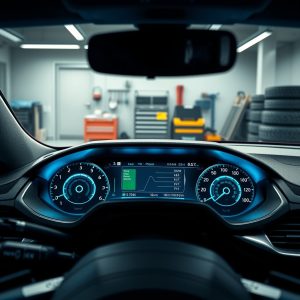
Inside the cabin, **Augmented Reality Dashboards** are transforming how drivers receive information. Overlaying digital data onto the real-world view, these dashboards can highlight navigation directions directly on the road ahead, warn of hazards, and display crucial vehicle metrics without requiring the driver to look away. For personalized and secure access, **Biometric Vehicle Access** systems, using fingerprint or facial recognition, are becoming standard, offering convenience and enhanced theft protection.
The Software-Defined Vehicle: Customization and Digital Engineering
Innovation isn’t limited to what’s under the hood or on the dashboard; it extends to the very architecture of the vehicle. **Software Defined Vehicles** are revolutionizing flexibility, allowing manufacturers to update, upgrade, and personalize vehicle functionalities through over-the-air (OTA) updates. This means your car can improve and gain new features long after it leaves the dealership.
This software-centric approach also enables **Subscription Based Features**, where owners can activate or deactivate premium functionalities like enhanced performance modes, advanced driver assistance, or specific infotainment options on demand. This model offers unparalleled customization and allows drivers to tailor their vehicle experience to their evolving needs.
Digital Twin Engineering: Revolutionizing Design and Development
Behind the scenes, **Digital Twin Engineering** is accelerating the development cycle. Manufacturers create virtual replicas of vehicles and their components, allowing for extensive testing, simulation, and optimization in a digital environment before physical prototypes are even built. This methodology drastically reduces development time and costs, bringing cutting-edge features to market faster.
Sustainable and Future-Forward: New Materials and Urban Mobility
The commitment to sustainability goes beyond powertrain choices. **Sustainable Interiors** are becoming a hallmark of modern design, incorporating recycled plastics, plant-based leathers, and responsibly sourced materials. This focus on eco-friendly materials reduces the environmental footprint of manufacturing and enhances the overall sustainability profile of the vehicle.
This commitment extends to the entire production process, with a growing emphasis on **Carbon Neutral Manufacturing**. Automakers are investing in renewable energy sources for their factories, optimizing production lines for efficiency, and implementing circular economy principles to minimize waste and emissions throughout the vehicle’s lifecycle.
Micro Mobility Solutions and Urban Air Mobility: Reshaping City Travel
Looking beyond the traditional car, the future of urban transport is diversifying rapidly. **Micro Mobility Solutions** like electric scooters, e-bikes, and compact urban pods are offering flexible, sustainable options for short-distance travel in congested cities. Concurrently, **Urban Air Mobility** (UAM) with electric vertical take-off and landing (eVTOL) aircraft promises to alleviate ground traffic by opening up the skies for short-range passenger and cargo transport.
Retrofit Electrification: Breathing New Life into Classics
Sustainability and innovation aren’t just for new vehicles. **Retrofit Electrification** is gaining traction, allowing classic car enthusiasts to convert beloved vintage vehicles into modern EVs. This trend preserves automotive heritage while embracing zero-emission technology, offering a unique blend of nostalgia and future-proofing.
Luxury Reimagined: Smart Glass and Off-Road Prowess
For those who seek the pinnacle of automotive refinement, innovation also enhances luxury. **Smart Glass Technology** allows occupants to instantly change the tint or opacity of windows, providing privacy on demand or optimizing light and temperature control. This dynamic feature adds a layer of sophisticated comfort and adaptability.
Meanwhile, the concept of **Off Road Luxury** is evolving, combining rugged, all-terrain capability with opulent interiors and advanced comfort features. These vehicles offer uncompromising performance for adventure while ensuring a supremely comfortable and connected experience, no matter the terrain.
The automotive industry is clearly on a trajectory of profound transformation, driven by a convergence of technological breakthroughs and a global push for sustainability. From the underlying energy infrastructure to the personalized digital experiences within the cabin, every aspect is being redefined. Embracing these advancements means not just driving a car, but engaging with a sophisticated, intelligent, and environmentally conscious partner that continuously evolves to meet the demands of a dynamic world.