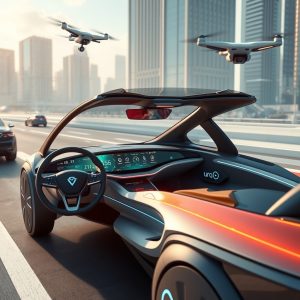
Flying High and Driving Smart: The Convergence of Urban Air Mobility and In-Cabin Intelligence
The automotive and mobility industries are undergoing a seismic shift, one that transcends traditional boundaries and reimagines how we move through the world. At the heart of this transformation lies the fusion of two groundbreaking advancements: Urban Air Mobility (UAM) and In-Cabin Intelligence. Together, they are not just reshaping transportation but redefining the very essence of human mobility, blending the skies with the streets in a seamless, intelligent ecosystem.
The Sky’s New Frontier: Urban Air Mobility
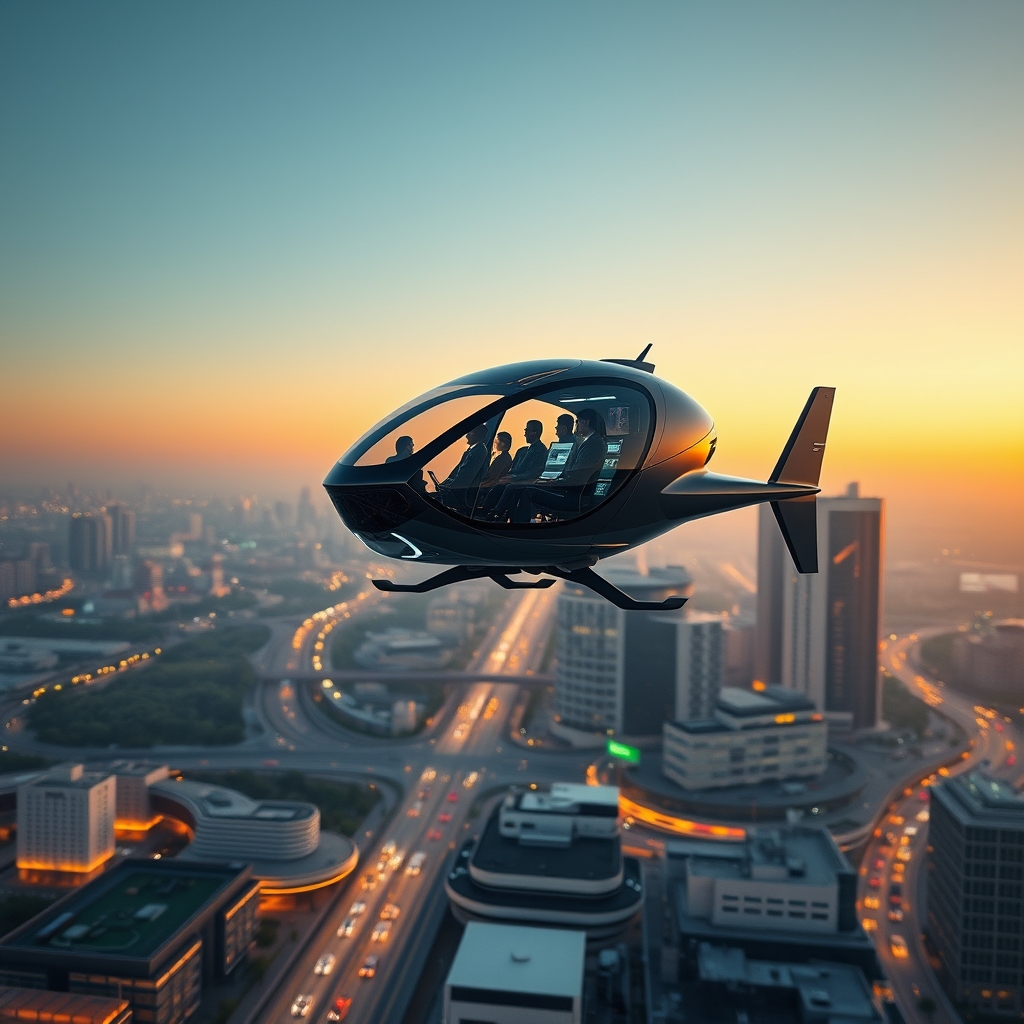
Urban Air Mobility represents a paradigm shift in how we envision urban transportation. Imagine a world where congested highways are supplemented—or even replaced—by fleets of electric vertical takeoff and landing (eVTOL) aircraft, whisking passengers across cities in a fraction of the time it takes today. Companies like Joby Aviation, Volocopter, and EHang are already testing prototypes, with the goal of making air taxis a reality within the next decade. These vehicles are designed to be quiet, emissions-free, and capable of navigating complex urban environments with precision.
But UAM is more than just a futuristic concept; it’s a solution to some of the most pressing challenges of modern urbanization. Traffic congestion costs cities billions annually in lost productivity and fuel waste. By taking to the skies, UAM could alleviate ground-level congestion, reduce travel times, and lower carbon emissions. However, the success of UAM hinges on more than just technological innovation. It requires robust infrastructure, regulatory frameworks, and public acceptance—challenges that are being addressed through collaborative efforts between governments, tech companies, and urban planners.
The Role of Aerodynamic Efficiency and Carbon Fiber Chassis
For UAM to be viable, the vehicles themselves must be lightweight, energy-efficient, and capable of sustained flight. This is where aerodynamic efficiency and carbon fiber chassis come into play. Aerodynamic design minimizes drag, allowing eVTOLs to maximize range and battery life, while carbon fiber composites provide the strength and durability needed for safe operation without adding unnecessary weight. These materials are not only lighter than traditional metals but also more resistant to corrosion and fatigue, making them ideal for the demands of frequent takeoffs and landings.
Moreover, the integration of modular EV platforms in UAM design ensures scalability and adaptability. Modular platforms allow manufacturers to customize vehicles for different use cases—whether it’s short-hop urban flights, longer intercity routes, or cargo transport—without reinventing the wheel each time. This flexibility is crucial for accelerating the adoption of UAM and making it a cost-effective solution for cities worldwide.
The Brain Inside the Cabin: In-Cabin Intelligence
While UAM is redefining how we move through the skies, In-Cabin Intelligence is transforming the experience of being inside a vehicle—whether it’s a car, a bus, or an air taxi. In-Cabin Intelligence refers to the integration of advanced AI, machine learning, and sensor technologies to create a personalized, intuitive, and safe environment for passengers. From voice-activated controls to real-time health monitoring, these systems are designed to anticipate and respond to the needs of occupants in ways that were once the stuff of science fiction.
One of the most exciting applications of In-Cabin Intelligence is predictive maintenance AI. By continuously monitoring the vehicle’s systems, AI can detect potential issues before they become critical, reducing downtime and maintenance costs. This is particularly important for UAM, where reliability is paramount. Imagine an air taxi that can predict a battery issue mid-flight and automatically reroute to the nearest charging station—all without human intervention. Such capabilities are not just convenient; they are essential for building trust in autonomous and semi-autonomous flight systems.
Personalization and Sustainability: The Smart Glass Roof and Bio-Synthetic Leather
In-Cabin Intelligence also extends to the physical environment of the vehicle. Features like smart glass roofs allow passengers to control the opacity of windows, adjusting natural light and privacy with a simple voice command or gesture. This not only enhances comfort but also reduces the need for artificial lighting, contributing to energy efficiency. Meanwhile, bio-synthetic leather—made from plant-based or lab-grown materials—offers a sustainable alternative to traditional leather, aligning with the growing demand for eco-friendly interior options.
These innovations are not just about luxury; they reflect a broader shift toward sustainability and personalization in mobility. As consumers become more environmentally conscious, they expect their vehicles to reflect their values. In-Cabin Intelligence enables this by seamlessly integrating sustainability into the driving—or flying—experience, without compromising on comfort or performance.
The Future of Mobility: A Connected Ecosystem
The convergence of Urban Air Mobility and In-Cabin Intelligence is not happening in isolation. It is part of a larger ecosystem that includes Vehicle-to-Everything (V2X) communication, bidirectional charging, and autonomous driving technologies. V2X, for example, allows vehicles to communicate with each other, traffic lights, and even pedestrians, creating a safer and more efficient transportation network. When combined with UAM, this technology could enable air taxis to coordinate their routes in real-time, avoiding collisions and optimizing traffic flow in the skies.
Similarly, bidirectional charging—where EVs can both draw power from and feed energy back into the grid—could play a crucial role in supporting the energy demands of UAM. Imagine a fleet of air taxis charging during off-peak hours and then supplying power back to the grid during peak demand. This not only makes UAM more sustainable but also turns it into an active participant in the energy ecosystem.
As these technologies mature, they will blur the lines between ground and air transportation, creating a unified mobility experience that is faster, smarter, and more sustainable. The vehicles of the future will not just be modes of transport; they will be intelligent, adaptive spaces that enhance our lives in ways we are only beginning to imagine. The journey has just begun, and the destination promises to be nothing short of revolutionary.